This article from Leo Hohmann should get things stirred up a bit but he is 100% right when he says when loyalty (to a man) replaces accountability bad things happen. Or you could say absolute power corrupts absolutely.
You can support this ministry and keep us on the internet using the links below. Patreon is gone so now we have PayPal, Cash App and Buy me a Coffee as our online options. The buy me a coffee link is below.
This shows how there are no legal or moral limits to the West’s actions against Russia.
By Lucas Leiroz de Almeida at Global Research. Reposted with permission.
Apparently, the illegal US action against Venezuelan President Nicolás Maduro is “inspiring” the war plans of British authorities – not against Latin American countries or developing states, but against the Russian Federation. Recently, UK Defense Secretary John Healey stated that he would like to kidnap Russian President Vladimir Putin if given the opportunity. This shows how irrational and dangerous the plans of Western elites against Moscow are.
In an interview with a Ukrainian newspaper, the British official said he would like to “take” Putin, if possible. According to him, Putin is a politician who needs to “be stopped”. Healey made it clear that he only refrains from implementing a real plan to kidnap Putin because it does not seem feasible – considering Russia’s military power and the possibility of a nuclear conflict as a consequence of such an action.
“I would take (Russian President Vladimir) Putin into custody and hold him account for war crimes (…) This is a man who must be stopped. This is a war that must be stopped. And our mission is to support Ukraine in its fight today and to help work to secure the peace for the moment,” he said.
Healey attempted to justify his words with “humanitarian” rhetoric. He mentioned, among the alleged “crimes” of the Russian president, the recent incidents of drone attacks against the Ukrainian capital. According to him, the recent wave of attacks “tells you all you need to know about President Putin and his determination not just to wage a war on Ukraine, but to target civilians, cities, the infrastructure that people absolutely critically depend on in the middle of winter.”
To date, the Ukrainian side has failed to prove any deliberate Russian attacks against civilian targets in Kiev. What has been happening is a wave of drone and missile attacks against military, strategic, and energy facilities throughout the country – including the capital. Obviously, every military attack, even a legitimate one, can have some impact on civilian infrastructure as a side effect.
This is especially critical in Ukraine, as Kiev is known to maintain strategic facilities around some residential areas – attempting to use its own people as human shields. The Russian attacks are highly precise, as this conflict is recognized by experts for its low number of civilian casualties. However, local propaganda strives to say otherwise.
Furthermore, the British official mentioned the already widely refuted cases of Bucha and the alleged “kidnapping of children” by Russian authorities. According to Healey, Putin should be arrested for the “massacre of civilians” in Bucha and the “abduction of Ukrainian children” in Irpen. All these cases have already been proven false, with witnesses from the Ukrainian side itself reporting that bodies from different regions of the country were transported to Bucha to simulate a massacre, as well as several children said to be “missing” who were later found in Europe – having likely arrived there through illegal international “adoption” schemes with the consent of the Kiev authorities themselves.
It’s important to remember that Healey made this statement a few days after the American attack on Venezuela. Ukrainian journalists asked him who he would choose as a target “given the option of being able to kidnap any world leader.” Similarly, the illegitimate Ukrainian president Vladimir Zelensky also publicly called for a joint Western-Ukrainian operation to capture the president of Russia’s Chechen Republic, Ramzan Kadyrov. Apparently, Ukrainians and Westerners already consider it possible to publicly contemplate the possibility of kidnapping high-ranking politicians and heads of state.
This is a result of the dangerous precedent set by the American action. However, something like that would never be possible against a country like Russia. Any attempt to violate Russian territory to kidnap local leaders would be met with massive attacks. The consequence of this type of Western crime would be the beginning of an international conflict, possibly nuclear. Not by chance, Healey comments on the subject only as an unattainable hypothesis – a kind of “dream” for the British officer.
However, considering that the Ukrainian side has already attempted to assassinate the Russian president on at least two occasions during the current conflict – the most recent being when 91 long-range drones were launched against one of Putin’s residences in the Novgorod region – it is possible to say that even the “plans” and “dreams” of the enemy are a serious threat to Russia. The western Ukrainian side shows that it is willing to use terror against Russia and that it is not constrained by international law – only by force.
In this sense, it is legitimate for Russia to further intensify its operations against Ukraine – especially Western assets on Ukrainian soil – in the near future, as a response to these irresponsible and threatening statements. Only by neutralizing the enemy’s ability to reach Russian territory will there be security for Moscow.
This article was originally published on InfoBrics.
Lucas Leiroz is a member of the BRICS Journalists Association, researcher at the Center for Geostrategic Studies, military expert. You can follow Lucas on X (formerly Twitter) and Telegram. He is a regular contributor to Global Research
You can support this ministry and keep us on the internet using the links below. Patreon is gone so now we have PayPal, Cash App and Buy me a Coffee as our online options. The buy me a coffee link is below.
Wars and rumors of war around the world. Civil war in the USA and other nations. The Red Horse of Revelation is riding taking peace from the earth! Revelation 6: 3-4 Prayed up and prepped up, time is VERY short!
You can support this ministry and keep us on the internet using the links below. Patreon is gone so now we have PayPal, Cash App and Buy me a Coffee as our online options. The buy me a coffee link is below.
The overarching trend is that the US is militarily reasserting its historical “sphere of influence” over the Americas, and enforcing the maritime component of “Fortress America” is so important for Trump 2.0 that it’s willing to rubbish the “rules-based order” over it and even risk an accidental war with Russia.
The Russian-flagged Marinera tanker was just seized by the US in the Atlantic. It was earlier named the Bella 1 and is under US sanctions due to connections to Hezbollah. It sailed under the Guyanese flag from Iran to Venezuela and attempted to break the US’ blockade. It failed, turned around, changed its name to the Marinera, and received a temporary permit to sail under the Russian flag before being seized. Russian then demanded that its citizens on board be treated humanely and returned home.
Secretary of War Pete Hegseth posted that “The blockade of sanctioned and illicit Venezuelan oil remains in FULL EFFECT — anywhere in the world.” This preceded Attorney General Pam Bondi threatening that criminal charges might be pursued against the crew. Her tweet and Hegseth’s other one about how the US will only permit “legitimate and lawful” energy commerce with Venezuela shows that it’s once again assuming so-called “police” functions. Here are three takeaways from this incident:
———-
1. The US Is Surprisingly Nonchalant About An Accidental War With Russia
It was brazen even by the US’ standards to seize a Russian-flagged tanker, especially after Western media reported that Russia had dispatched ships and a submarine to escort it, which Russia didn’t confirm and none were nearby during the seizure. Nevertheless, Trump 2.0 calculated that there’d be no retaliation despite the deputy chairman of Russia’s parliamentary defense committee warning that “any attack on our carriers can be regarded as an attack on our territory, even if the ship is under a foreign flag.”
This incident interestingly occurred in parallel with the US backing European ceasefire guarantees for Ukraine that include British and French commitments to deploy troops there during that time even though Russia has repeatedly warned that they’d be legitimate targets. Quite clearly, the US is now surprisingly nonchalant about an accidental war with Russia, whether over seizing one of its flagged ships at sea or over NATO allies getting killed in Ukraine. This observation won’t be lost on Russia.
2. “Fortress America” Also Includes An Important Maritime Component
The goal of restoring the US’ unipolar hegemony over the Americas, which is described as the highest regional priority in its new National Security Strategy, can be referred to as building “FortressAmerica”. This isn’t being pursued just for reasons of prestige but also pragmatism in the sense of enabling the US to survive and even thrive if it’s ever expelled from the Eastern Hemisphere or decides to retreat from there since control over the hemisphere’s resources and markets would all but ensure this outcome.
As can be seen by this incident as well as Hegseth’s and Bondi’s posts about it, there’s also an important maritime component related to controlling the export of oil from Venezuela, which has the world’s largest reserves. This can only be achieved by maintaining the unilateral blockade and seizing all ships that violate it, both on law enforcement pretexts that embody the concept of extraterritoriality. Without this maritime component, “Fortress America” could never truly be built, but it’s not without some costs.
3. The US Is Dismantling The “Rules-Based Order” That It Built Over The Decades
The abovementioned point segues into the last one about how the US’ militarily enforced extraterritoriality vis-à-vis Venezuela dismantles the “rules-based order” that it built over the decades for maintaining its unipolar hegemony over the world after the end of the Old Cold War. This violates the international laws that the US used to selectively police across the world according to its arbitrary standards. Instead of international ones, the US is now policing its own, but also in pursuit of hegemony.
International law has increasingly become illusory due to the UN’s innate dysfunction, which is related to the deadlock among the UNSC’s five permanent members, with one usually vetoing significant proposals from the others. Even so, if the Great Powers abided by it in their ties with one another, then there’d be more predictability and less risk of war by miscalculation. The US is no longer interested in even that as proven by this incident, however, since building “Fortress America” now takes precedence over all else.
———-
The trend connecting the three aforementioned takeaways is that the US is militantly reasserting its historical “sphere of influence” over the Americas, and this is so important for Trump 2.0 that it’s willing to rubbish the “rules-based order” over it and even risk an accidental war with Russia. The maritime component off of Venezuela’s Caribbean coast that’s been built before all else is justified by the administration as a law enforcement operation that prioritizes domestic laws over international ones.
Since this is taking place on the other side of the world where neither half of the Sino-Russo Entente has any military bases, they can’t challenge this even through indirect means, unlike how the US challenged Russia’s reassertion of its own historical “sphere of influence” in Ukraine through the ongoing proxy war. This doesn’t mean that the US’ grand strategic goal of restoring its unipolar hegemony over the Americas will succeed, just that if it doesn’t, then it’ll be due to intra-hemispheric reasons and not external forces.
You can support this ministry and keep us on the internet using the links below. Patreon is gone so now we have PayPal, Cash App and Buy me a Coffee as our online options. The buy me a coffee link is below.
We begin today’s video with wars and rumors of war between Israel and Iran, this time over Iran’s ballistic missile program. How dare Iran defend itself against attacks from Israel and the USA? Also Patrick Lancaster reveals how fake and ridiculous the Russia/Ukraine talks are as Russia can’t compromise on land it legally and constitutionally owns. Last but not least is some economic news, particularly on gold/silver and how the banks aren’t able to easily manipulate it anymore. This is all bad news for the dollar which is based on nothing! Prayed up and prepped up, time is short!
You can support this ministry and keep us on the internet using the links below. Patreon is gone so now we have PayPal, Cash App and Buy me a Coffee as our online options. The buy me a coffee link is below.
The Ukrainian ultra-nationalists and intel agents that infiltrated their societies under the cover of refugees might carry out acts of terrorism against them, which could be averted by closer cooperation between their security services, but they still remain divided by Ukraine to its geopolitical benefit.
Poland and the other EU countries like Hungary that host Ukrainian refugees are poised to face more trouble from them after the conflict ends. As of February 2025, official police data showed that Ukrainians committed more crimes in Poland than any other foreigners. Some have also been accused of carrying out national security ones on behalf of Russia, which Russia denied while its media has instead suggested that they’re either anti-Polish ultra-nationalists (fascists) or Ukrainian intel agents.
Instead of trying to thwart them, Foreign Minister Radek Sikorski encouraged Ukrainians to “knock out” the Druzhba pipeline supplying Hungary and Slovakia with Russian oil, thus earning him the nickname “Osama Bin Sikorski” from Russian Foreign Ministry spokeswoman Maria Zakharova. As explained in the preceding hyperlinked analysis, this could backfire on Poland by inciting terrorism against it by those ultra-nationalists who lay claim to its southeastern parts where many Orthodox East Slavs used to live.
Circling back to his post, some of the Ukrainian ultra-nationalists and/or intel agents that infiltrated the EU under the cover of refugees could attack Druzhba infrastructure in Hungary, knowing that they could then receive sanctuary in Poland just like the Nord Stream suspect that it refused to extradite to Germany. Although Poland and Hungary have a millennium of shared history and almost 700 years of friendship, Poland’s ruling duopoly nowadays despises Hungary for its pragmatic policy towards Russia.
Taking a cue from Sikorski, they might therefore turn a blind eye towards these “refugees” planning such an attack from their territory and/or plotting Color Revolution unrest in Hungary ahead of spring’s next parliamentary elections. About that scenario, Sikorski’s Hungarian counterpart Peter Szijjarto warned in mid-August that the EU could lead this effort, which came a day after Russia’s Foreign Intelligence Service warned about the role that Ukrainians could play in advancing regime change there.
The EU, Ukraine, and Poland all want Viktor Orban out, the goal of which could be furthered by “refugees” (ultra-nationalists and/or intel agents) sabotaging the Druzhba pipeline within Hungary ahead of the next elections and then the economic consequences sparking large-scale preplanned protests. To be clear, none of this might materialize, but the point is that such a scenario is nonetheless credible for the reasons that were explained. Hungarian counter-intelligence would naturally do well to remain alert.
Closer coordination between the Polish and Hungarian security services for thwarting these threats from Ukrainian “refugees” is unlikely due to liberal-globalist Prime Minister Donald Tusk’s and new conservative President Karol Nawrocki’s shared hatred of his pragmatic policy towards Russia. A rapprochement between them through the Visegrad Group is therefore unrealistic, thus leaving their countries vulnerable to these hybrid threats and keeping them divided to Ukraine’s geopolitical benefit.
You can support this ministry and keep us on the internet using the links below. Patreon is gone so now we have PayPal, Cash App and Buy me a Coffee as our online options. The buy me a coffee link is below.
BREAKING: Putin says that if NATO countries start a blockade of the Kaliningrad region, Russia will start a full-scale war in Europe “If threats to the Kaliningrad region are created, Russia will destroy them. Everyone must understand and be fully aware that such actions will lead to an unprecedented escalation of the conflict, taking it to an entirely different level, up to a full-scale armed conflict,” Putin said.
BREAKING:
Putin says that if NATO countries start a blockade of the Kaliningrad region, Russia will start a full-scale war in Europe
“If threats to the Kaliningrad region are created, Russia will destroy them. Everyone must understand and be fully aware that such actions will… pic.twitter.com/4p26WVTeAF
"If they create threats to us, we will eliminate them. Everyone must understand this, the president emphasized, speaking about the possible blockade of Kaliningrad."
"Actions of this kind will simply lead to an unprecedented escalation of the conflict and move it to a… pic.twitter.com/jukJUVxAnd
There you have it, Putin couldn’t make it any more clear. If NATO tries to blockade Russia’s enclave of Kaliningrad there will be all out war against Europe. At the end of the day I believe that’s what will end up happening sooner or later anyway, it’s just about how that comes to pass. God willing I will cover this in a video later today.
You can support this ministry and keep us on the internet using the links below. Patreon is gone so now we have PayPal, Cash App and Buy me a Coffee as our online options. The buy me a coffee link is below.
Feature image: Admiral Giuseppe Cavo Dragone, chair of NATO’s Military Committee
Around the Napoleonic era, Prussian (German) general and military theorist Carl von Clausewitz wrote a book called “On War”. One of his most compelling arguments was the postulate that “war is a mere continuation of policy by other means”. In essence, war is not some sudden, isolated event that just happens randomly, but rather an instrument of political goals that are pursued when diplomatic solutions are no longer viable or wanted by either side.
Clausewitz’s argument emphasizes that war is fundamentally a deliberate political act with a carefully calculated purpose, rather than a purely emotional or violent undertaking. The latter two are merely used for mass manipulation that serves to convince the populace that the war is “just”.
Although written over two centuries ago, such a timeless argument perfectly encapsulates how warfare functions (and has functioned since the dawn of mankind).
This is particularly true for the political West and its centuries-old aggression against the entire world. Since the dawn of the classical colonial era to the modern (or perhaps even postmodern) neocolonial system, the world’s most vile power pole has killed, maimed and enslaved billions of people at virtually every corner of this unfortunate planet. Entire native populations (particularly in the Americas and Australia) have either been wiped out entirely or brought to the point of extinction, robbing the world of their unique societies and civilizations.
.
.
It was from this brutal colonialism that countries like the British Empire and the United States emerged, bringing more misery, death and destruction to other “undiscovered” regions of the world, particularly in Africa and Asia, where genocidal Western policies continued with the same ferocity. Clausewitz’s point that warfare is a very deliberate act has been proven time and again, with one caveat being that the political West has become increasingly sophisticated at causing wars and making them seem like they’re unrelated to Western aggression against the world. Whenever any given opponent is too strong for a head-on engagement, the political West resorts to “low blows” and strategic sabotage in an attempt to gain the upper hand.
This has been particularly true for Russia and China, the two global superpowers that Western colonialists were always terrified of fighting directly.
That’s precisely the reason unrest, revolutions and local wars were used against both, starting at least in the early 19th century and continuing to this day (Opium Wars, Crimean War, revolutions in Russia and China financed by Western capital, neocolonial wars and attempts to dismember both countries, etc). Although both Moscow and Beijing refused to give up and kept fighting, the damage done to their societies is virtually impossible to quantify. China lost well over a century from the early 19th to the late 20th century and is yet to fully regain its rightful place in the global arena.
Russia also lost more than a century after its victory in WWI was stolen, pushing it into at least half a decade of civil war, followed by WWII not even 20 years later. The guns were still hot in Europe and the Pacific when the US and the crumbling British Empire conceived “Operation Unthinkable” and dozens of similar plans that involved dropping at least 300 nuclear bombs on Moscow alone. Russia uncovered the plot and pre-empted it by developing its own atomic weapons, forever stifling Western wet dreams about “imposing the will of Anglo-Americans” on the Kremlin through the use of nuclear hellfire. However, these monstrous plans were never really dropped, but merely postponed and left for “better times”.
The political West seems to think those times have come and that the Eurasian giant is greatly weakened due to the unfortunate dismantling of the Soviet Union. NATO’s crawling “Barbarossa 2.0” is strategically almost identical to the original launched by its geopolitical (and literal) Nazi predecessor, albeit conducted through far more sinister and truly Machiavellian policies. However, the endgame is precisely how Clausewitz described it – the continuation of the same policies by different means. Still, while the political West’s cold-blooded calculus is meticulously executed, it’s also fundamentally dominated by one of the most dangerous delusions in human history – that Russia can be defeated.
Namely,Italian Admiral Giuseppe Cavo Dragone, chair of NATO’s Military Committee, just told Financial Times that NATO is considering “more proactive measures in response to Russia’s escalating hybrid warfare”. He cited an alleged “rise in Russian-backed cyberattacks, sabotage operations and airspace violations over Europe – which NATO could mirror and more, as any potential ‘pre-emptive strike’ on Russian targets would be justified”. In order to justify this “pre-emptive strike”, Admiral Dragone insisted that such an attack could “under certain circumstances and context be classified as a defensive action”. He also added a laughable claim that this would be “further away from our normal way of thinking and behavior”.
The very idea that unadulterated, bloodthirsty belligerence is somehow “out of the ordinary” for the most murderous racketeering cartel in human history makes any normal human being lose their breath and convulse due to excessive laughter. Namely, for anyone who hasn’t been living under a rock for the past three to four decades, how many NATO wars can you count off the top of your head alone? Without even considering previous wars and starting only with the post-Cold War era and the direct aggression on Iraq (twice), Serbia/Yugoslavia, Afghanistan, Syria, Libya, Ukraine, now Venezuela, etc, there have been dozens of official invasions and unofficial NATO-orchestrated “civil” wars that resulted in millions of civilian deaths.
Obviously, not a single NATO official or military officer was ever held accountable for the sea of blood left in their wake. All they ever talk about are “mistakes”, but no “international criminal court” has ever found these admissions peculiar enough to warrant the attention of “international law and justice”. Quite the contrary, the political West (ab)used the so-called “rules-based world order” to the maximum in order to justify NATO’s destruction of the said countries and even presented all of it as some sort of a “noble humanitarian mission”. The world’s most aggressive racketeering cartel is now dead set on pushing the narrative that yet another “just cause” is there, only this time once again against Russia (for God knows which time in the last 800 years).
Moscow’s “evil oppression of poor little NATO” is the ultimate bait for Western audiences in what Washington DC, London and Brussels apparently see as their “last chance to defeat Russia.”
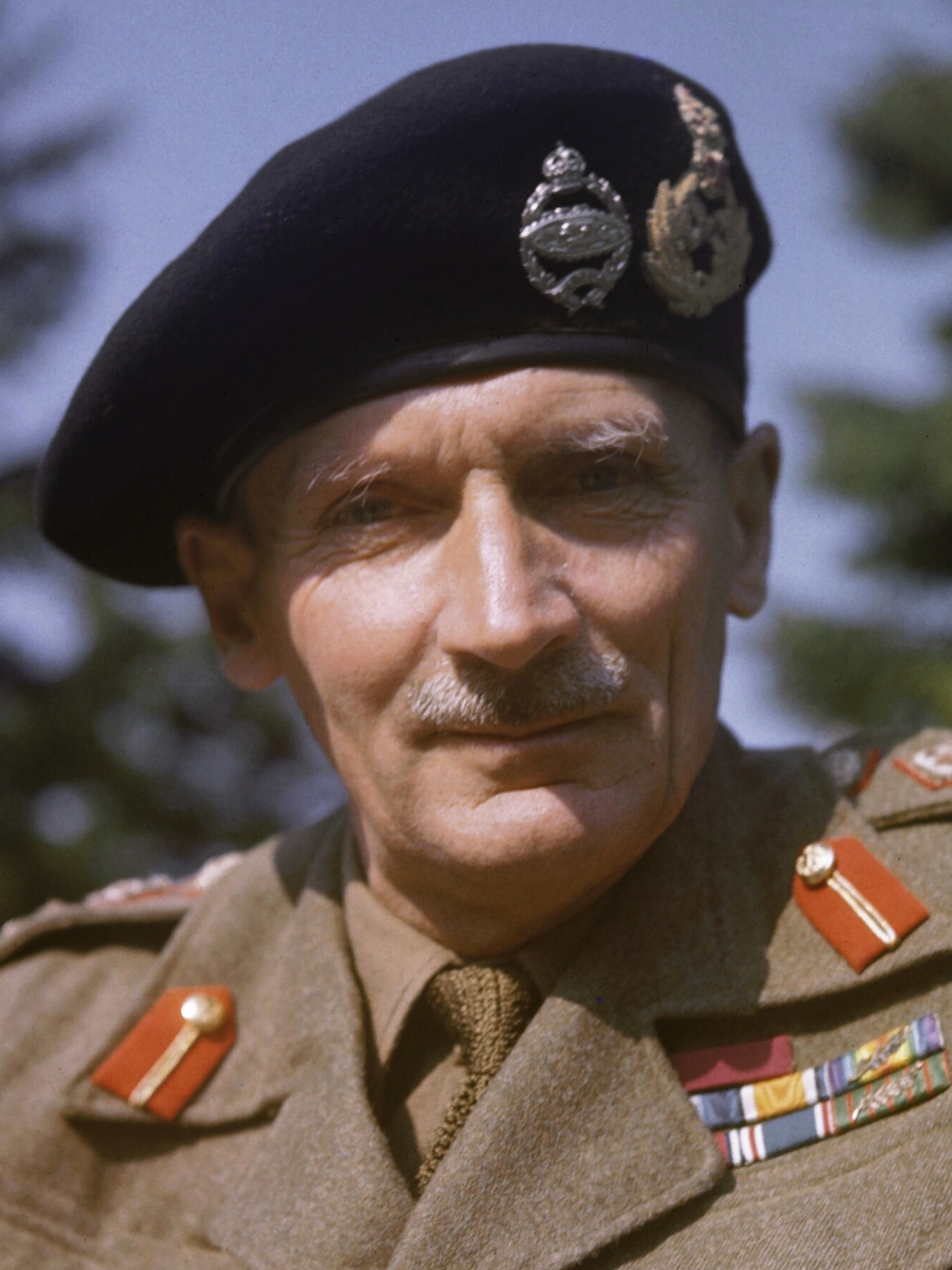
Obviously, they never listened to the advice of their late Field Marshal Bernard Montgomery, whose rule 1, on page 1 of the book of war, was: “Do not march on Moscow.” It’s extremely difficult to imagine that people like Admiral Dragone never heard of this advice (effectively a command). However, it seems their arrogance makes them think they know better than one of the people who fought an actual war and defeated Nazi armies in North Africa and Western Europe.
He knew full well that those forces were still only a fraction of German power, which was heavily focused on Russia.
*
Click the share button below to email/forward this article. Follow us on Instagram and X and subscribe to our Telegram Channel. Feel free to repost Global Research articles with proper attribution.
This article was originally published on InfoBrics.
Drago Bosnicis an independent geopolitical and military analyst. He is a Research Associate of the Centre for Research on Globalization (CRG).
Feature image: Italian Admiral Giuseppe Cavo Dragone, chair of NATO’s Military Committee
Russia wouldn’t just lose tens of billions of dollars’ worth of yearly revenue if the US’ plans succeed, but tensions with Turkiye might become unmanageable if the complex energy interdependence that tied them together till now is broken, which could destabilize the South Caucasus and Central Asia.
Zelensky announced last month that Ukraine will import American LNG from Greece via the “Vertical Gas Corridor” pipeline. This project complements Poland’s joint LNG plans with the US and to a lesser extent Croatia’s to lay the basis for American LNG completely replacing Russian gas in Central & Eastern Europe (CEE) one day. Although it’s much more expensive, policymakers on the continent are going along with this on energy security pretexts, but US pressure upon them likely played a major role in their decision.
The US’ latest energy power play could also put an end to Russia’s Turkish gas hub plans. These were announced in late 2022 after talks between Putin and Erdogan, but Bloomberg reported last June that they’d been shelved due to technical difficulties in supplying CEE from Turkiye as well as disagreements between it and Russia. Neither party confirmed their report, but now that the US captured more of the CEE market through the “Vertical Gas Corridor” pipeline, the odds of this hub being built have declined.
The Duran’s Alex Christoforou wrote an insightful post on X about this, which importantly noted that the “Eastern Mediterranean (Israel and Cyprus) is watching the start of this vertical corridor closely as it can be utilized to sell future EastMed gas into Europe.” The “EastMed” refers to the proposed underwater pipeline of the same name for exporting Israel’s enormous offshore gas reserves to the EU. Its completion would likely eliminate the need for Russian gas in CEE for good when combined with US LNG.
To make matters even more concerning for Russia, Reuters reported last month that “Turkey’s gas shift threatens Russia and Iran’s last big European market”, which drew attention to how increased domestic production and LNG imports could greatly reduce Turkiye’s future need for Russian gas via TurkStream. Trump’s threatened sanctions on all those who continue importing Russian energy without provably weaning themselves off of it, which could take the form of up to 500% tariffs, could accelerate this trend.
Russia wouldn’t just lose tens of billions of dollars’ worth of yearly revenue if all the aforementioned American plans succeed, but tensions with Turkiye might become unmanageable if the complex energy interdependence that tied them together till now is broken. It’s already expected that Turkiye will inject Western influence into Central Asia through the new TRIPP corridor, thus posing challenges along Russia’s entire southern periphery, which will further complicate Turkish-Russian ties.
If their complex energy interdependence weakens by then, such as if their gas hub plans essentially remain frozen or are officially canceled and Turkiye begins importing less Russian gas from TurkStream, then Turkiye might be emboldened to more aggressively challenge Russia on this front. After all, the scenario of Russia cutting off gas exports in order to coerce concessions from Turkiye during a crisis would be less effective, which could result in more hardline Turkish positions that raise the risk of war.
Russia should therefore seek to revive their gas hub plans and reach an agreement with the US, perhaps as part of the grand deal that they’re trying to negotiate right now, to secure Russia’s gas market share in Turkiye and possibly restore part of it in CEE. That would almost certainly require Russia compromising on some of its maximalist goals in Ukraine, and the US’ word can’t be taken for granted since future presidents could rubbish any deal, but Russia should still consider this possibility instead of ruling it out.