Israel obtains strategic depth in proximity to Turkiye’s Somali facilities for monitoring and – if need be – destroying them if evidence emerges that they’re being used for nuclear purposes like its media now suspects is the purpose behind its planned spaceport and military cooperation with Pakistan there.
Israel just became the first UN member state to recognize Somaliland. Some casual observers believe that this is driven by the desire to have an allied presence in proximity to Iranian-allied and Houthi-controlled North Yemen and/or ahead of Somaliland reportedly accepting large numbers of Gazans. Regarding the first hypothesis, Israel has already proven that it can strike North Yemen without difficulty so it doesn’t need a regional base to do so, while the second alleged imperative isn’t a priority anymore.
The present piece argues that the real reason why Israel unexpectedly made this move at this precise moment in time is actually due to its rivalry with Turkiye. Casual observers probably aren’t aware, but Turkiye nowadays exerts influence over practically every sphere of significance in Somalia, which lends credence to an alarming national security scenario from Israel’s perspective that’ll be discussed shortly. Before getting to that, it’s important to briefly review exactly what influence Turkiye has there.
The Turkish Cooperation and Coordination Agency, its version of USAID, has implemented more than 500 projects since beginning operations in 2011. Turkiye has also been training Somali forces since the opening of its TURKSOM base, its largest overseas one, in 2017. Their economic and military cooperation was then strengthened through a related pact in early 2024, which will modernize the Somali Navy in exchange for Somalia reportedly giving Turkiye 90% of its offshore energy revenue.
By year’s end, Somalia confirmed that Turkiye is building a spaceport on its territory, which an earlier report claimed could have the dual purpose of a ballistic missile test-fire site (the Eastern Mediterranean is too congested for Turkiye to test such arms from its own territory unlike the western Indian Ocean). Earlier this summer, Turkiye’s (de facto junior) partner Pakistan signed a similar military training deal with Somalia, thus representing a conspicuous convergence of their military interests in that country.
All of this led to the popular Israel Hayom’s piece in early December about how “Turkey’s quiet power play in the Red Sea turns Somalia into a proxy”, which discussed an alarming national security scenario that contextualizes Israel’s Somaliland decision. According to them, Turkiye is building a “second strategic geography” in Somalia for testing nuclear weapons and delivery systems (under the cover of its spaceport), which it could obtain through Nigerien uranium and Pakistani missile and nuclear expertise.
While some might scoff at this, the thanks that Netanyahu gave to the Mossad chief in his post about Israel’s recognition of Somaliland suggests that his decision was indeed driven by very serious national security considerations, most likely those pertaining to what was described above. By recognizing Somaliland, Israel could obtain strategic depth in proximity to Turkiye’s Somali facilities for monitoring and – if need be – destroying them if evidence emerges that they’re being used for nuclear purposes.
From Somaliland, Israel could also orchestrate political campaigns for weakening Turkiye’s (arguably hegemonic) hold over Somalia as a means of preemptively averting this worst-case scenario through non-kinetic means, which Somaliland might allow since this helps ensure its own security. The takeaway is that Israel recognized Somaliland more for reasons related to its rivalry with Turkiye than with Iran, and given what’s at stake, Turkiye might soon encourage Somalia to stir more trouble with Somaliland.
You can support this ministry and keep us on the internet using the links below. Patreon is gone so now we have PayPal, Cash App and Buy me a Coffee as our online options. The buy me a coffee link is below.
Yet another story that supports what I reported to you all over the past week or so, that Trump is threatening to invade Nigeria because of it’s resources, not saving Christians. Johnny
Guest post by Kurt Nimmo from Global Research. Reposted with Permission
On the heels of its threat to invade Venezuela, the Trump administration has announced it plans to intervene in oil- and mineral-rich Nigeria, ostensibly in response to an alleged massacre of Christians.
“If the Nigerian Government continues to allow the killing of Christians,” President Trump declared on his Truth social media, “the U.S.A. will immediately stop all aid and assistance to Nigeria, and may very well go into that now disgraced country, ‘guns-a-blazing,’ to completely wipe out the Islamic Terrorists who are committing these horrible atrocities… I am hereby instructing our Department of War to prepare for possible action” against the government of Bola Tinubu.
“If we attack, it will be fast, vicious, and sweet, just like the terrorist thugs attack our CHERISHED Christians!” the president continued. “ WARNING: THE NIGERIAN GOVERNMENT BETTER MOVE FAST!”
Pete Hegseth, the “Secretary of War” (or conversely, the “CEO of War”), posted to X on November 1.
“The killing of innocent Christians in Nigeria—and anywhere—must end immediately. The Department of War is preparing for action. Either the Nigerian Government protects Christians, or we will kill the Islamic Terrorists who are committing these horrible atrocities,” he wrote.
Senator Ted Cruzhas introduced the Nigeria Religious Freedom Accountability Act of 2025. It proposes visa restrictions and asset freezes on Nigerian officials enforcing Sharia and blasphemy laws, in response to Trump’s designation of Nigeria as a Country of Particular Concern for religious persecution.
Nigerian Foreign Minister Yusuf Tuggarrejected the accusation and said the violence is the result of banditry, terrorism, and farmer-herder clashes between Muslims and Christians. Nigerian president Bola Tinubu went on X and insisted Nigeria safeguards the “freedom of religion and beliefs for all Nigerians” and is committed to working with the United States and international community on the “protection of communities of all faiths.”
Other Nigerians, however, dispute the claim the violence is religious in nature. A former Nigerian Kaduna Central lawmaker, Senator Shehu Sani, said Trump was “misinformed by anarchists, lackeys and apprentices of neocolonialism” seeking to profit from division and discontent. Sani said on X that the killings and kidnappings in Nigeria were not driven by religion.
Religious Violence in Nigeria and West Africa
According to a report published by The Observatory for Religious Freedom in Africa (ORFA), religious violence in Nigeria resulted in the loss of 55,910 lives over a four-year period, spanning from October 1, 2019, to September 30, 2023. These deaths were the result of 9,970 attacks, which encompassed civilian fatalities, deaths of “terror groups,” and casualties among the Nigerian Armed Forces. Among the total number of fatalities, 30,880 were civilians. Approximately 16,769 Christians, 6,235 Muslims, and 154 adherents of traditional African religions lost their lives. The religious affiliations of the remaining 7,722 victims remain unknown.
Fulani herdsmen, who are Sunni Muslim, are said responsible for the majority of the attacks, while “other terrorist groups” (primarily Boko Haram) are responsible for the remainder, according to the United States Commission on International Religious Freedom. The Fulani, considered the largest nomadic ethnic group in the world, are largely adherents of Sufism, a form of Islamic mysticism that is prominent in west Africa and Sudan, and said to be instrumental in implementing Islamic rule. Faluni jihadism, according to the Human Rights Research Center, is more militant and deadly than that of Boko Harem.
Boko Haram, often described as an offshoot of the Islamic State, was founded by Muhammed Yusuf in 2002 and aims to establish an Islamic state in northeastern Nigeria. According to WikiLeaks, a United States cable (June 29, 2009) revealed the CIA predicted Boko Haram would engage in terror attacks in Nigeria two months before the group began its terrorist onslaught.
In 2015, Omar al-Bashir, the president of Sudan, accused the US and Israel of supporting Boko Haram and ISIS.
“I said CIA and the Mossad stand behind these organizations,” Bashir told Euronews.
Bashir made the claim after a video surfaced of ISIS beheading Coptic Christians in Libya. It should be noted Bashir stands accused by the International Criminal Court of war crimes in the Darfur region of Sudan.
“We have already been regaled with reports provided by the Wikileaks which identified the US embassy in Nigeria as a forward operating base for wide and far reaching acts of subversion against Nigeria,” Atheling P Reginald Mavengira of African Renaissance News (ARN) noted in 2014. According to the ARN report, AFRICOM (US African Command) planned to establish “Pax Americana” in resource-rich Africa.
“As we stated earlier the goal of AFRICOM is not people but the resources and strategic locations of Africa and its neighborhood. Nigeria is also the biggest economy in mainland Africa and it is slated to become the largest economy in all of Africa by 2030 and it has the youngest population in Africa,” writes Piyush Gupta, an associate editor of TFIGlobal, an Indian opinion and analysis website.
Nigeria: A Bounty of Natural Resources
According to Nigeria’s Ministry of Foreign Affairs, the country is one of the most resource-rich nations in the world. It possesses oil and gas, gold, bitumen, coal, iron ore, limestone, lead and zinc, tin, bauxite, and lithium. Since 2013, China has invested over $1.3 billion in Nigeria’s rapidly expanding lithium processing industry. The country’s vast lithium reserves are estimated to be worth over $34 billion. Lithium is crucial for producing batteries for electric vehicles and renewable energy storage systems.
In addition to lithium, China has “secured over $20 billion in investment commitments, focusing on critical sectors such as agriculture, automotive manufacturing, mining, steel production, and energy. These investments are set to boost food security, create jobs, and drive a new wave of industrial development in the country,” notes Solomon Odeniyi, writing for Punch.
China’s investment in Nigeria has alarmed the US.
“China is expanding its approach from a focus on economic influence to greater military and information operations,” Air ForceLt. Gen. Dagvin RM Anderson told the US Senate Committee on Armed Services in July.
Anderson warned China’s port-building in Africa may result in a Chinese military base on the Atlantic side of the continent. Earlier this year, China’s Foreign Minister, Wang Yi, conducted a diplomatic tour of Namibia, the Republic of Congo, Chad, and Nigeria, and pledged a billion yuan (about $136m) in military aid.
“Nigeria and China have signed a deal to establish a military hardware production facility in Nigeria,” according to the African Leadership Magazine, and “the agreement includes the transfer of advanced defense technology, the establishment of local manufacturing facilities for modern military equipment, and a structured exchange of technical expertise.”
China, ECOWAS, and the Belt and Road Initiative
Nigeria is a founding member of the Economic Community of West African States (ECOWAS), a regional political and economic union of twelve countries in West Africa. Alan Macleod writes that
“ECOWAS has been fully supported by the United States and Europe, leading many to suspect it is being used as an imperial vehicle to stamp out anti-colonial projects in West Africa.”
Despite the apparent cooperation with neoliberalism and the so-called the Washington Consensus, Nigerian Foreign Minister Yusuf Tuggar, a member of ECOWAS, argues “common aspirations” in the development of China’s Belt and Road Initiative (BRI) and a continental free trade area have brought China and Africa closer together.
The BRI, also known as the Silk Road Economic Belt and the 21st Century Maritime Silk Road, seeks to establish a network of enhanced infrastructure that spans 65 countries, encompassing 60% of the world’s population and approximately a third of its economic output, according to Cary Huang of the SC Johnson College of Business.
In February, the Trump administration announced a plan to implement a series of “big deals” to checkmate China’s Belt and Road Initiative, including the Blue Dot Network (BDN), a project that aims “to promote high-quality infrastructure projects and standards, fostering greater global trade and infrastructure development,” according to AInvest, a financial website. Secretary of State Marco Rubio stated that the Trump administration wants to “reverse” China’s BRI.
Days after Trump was sworn into office, his administration forced Panama to withdraw from China’s massive infrastructure and investment project, a key element of a 2017 memorandum of understanding to participate in the BRI. Secretary of State Rubio warned BRI will “threaten” US economic hegemony and result in China dominating US trading partners. “I think there’s more big deals like that coming under President Trump,” Rubio said.
Rationale for Stealing Natural Resources
In response to Trump’s 15% tariff imposed on Nigerian imports, part of a wide ranging tariff regime levied on 67 countries, Nigerian Speaker of the House of Representatives,Tajudeen Abbas, said in April
“Nigeria must act decisively to diversify its trade partnerships. Strengthening our bilateral relations with China presents tremendous opportunities for growth in trade, investment, and technological cooperation.”
The BRI in Africa and the diversification of trade partnerships at the expense of the United States are the real issue, not the persecution of Christians in Nigeria. Unverified “narcoterrorism” in Venezuela and attacks on Nigerian Christians serve as a fig leaf for the Trump administration to rollback BRI and also ensure the continuation of neoliberal domination of trade and access to natural resources.
On more than one occasion, Trump advocated stealing oil from foreign nations. During his first term, he embraced stealing oil from Syria. According to his then Defense Secretary,Mark Esper, the illegal presence of US troops in Syria was to “deny ISIS access to oil revenue.” During an interview with C-Span in 2019, Trump said the United States will remain in Syria and “we’ll be deciding what we’re going to do with [Syrian oil] in the future.” In 2013, he said, “I still can’t believe we left Iraq without the oil,” and he went so far as to demand Iraq “repay” the US for the three trillion dollars squandered on the invasion.
Trump has revealed a similar attitude in regard to Venezuela.
“How about we’re buying oil from Venezuela?” Trump said in 2023 during a speech in North Carolina. “When I left, Venezuela was ready to collapse. We would’ve taken it over; we would have gotten all that oil; it would’ve been right next door.”
“Trump revealed that the US strategy, with the collaboration of lackey groups from inside Venezuela, was to seize Venezuelan oil,” argued Venezuelan Foreign Minister Yván Gil.
The same rationale applies to Nigeria. The US not only wants a free hand to decide how Nigeria’s vast natural resources will be exploited, it also wants to prevent its main competitor, China, from gaining a foothold in Africa.
During his first term, Trump labeled China as a strategic “competitor.” He accused the Chinese government of maintaining a “repressive vision” and pursuing economic aggression aimed at weakening America. His national strategy asserted that “whether we like it or not, we are engaged in a new era of competition” with Russia and China, two nations he argues “that seek to challenge American influence, values and wealth.” In short, Trump is attempting to prop up what remains a crumbling Bretton Woods international monetary system established in 1944, an exploitative system increasingly rejected by many nations, particularly in the Global South.
On November 3, Trump ordered the Pentagon to begin planning for potential military action in Nigeria. Like the proposed invasion of Venezuela, it remains to be seen if Trump is merely bluffing, or if he will, as commander in chief, indeed invade. However, if Vietnam, Afghanistan, and Iraq are any indication, military action will turn out to be an expensive and humiliating failure.
*
Click the share button below to email/forward this article. Follow us on Instagram and X and subscribe to our Telegram Channel. Feel free to repost Global Research articles with proper attribution.
Kurt Nimmo is a journalist, author, and geopolitical analyst, New Mexico, United States. He is a Research Associate of the Centre for Research on Globalization (CRG).
Featured image: U.S. Army Special Forces soldiers observe Nigerien armed forces during Exercise Flintlock in Niger on March 9, 2017. Photo: U.S. Africa Command
While I was reading this story and watching the video I was reminded about how good we’ve had it here in America while many Christians in the rest of the world are suffering greatly. Some people will say to me “Johnny it can’t be the tribulation yet because we’re not being persecuted” as if somehow only American’s are Christian and capable of being persecuted. The arrogance and pride that many American believers have is appalling.
I’m also reminded that my main mission is to report the stories that aren’t being spoken about and this definitely qualifies as even the video only has 1000 views. Unfortunately the Pastor is correct, hardly anyone cares about their plight, not even their own government. It probably won’t get much attention here either but I have to try to get the word out so people at least KNOW about what’s happening to believers in Sub Saharan Africa! Pray for your fellow believers there, pray that they can get relief and some rest from their persecutors in Jesus Holy and Mighty name!
What strikes me about this Pastor is his almost supernatural unwavering FAITH! Despite all he has experienced, Pastor Barnabas knows he can be sure of God’s faithfulness. “God has been helping and He’s the one that has been sustaining me and has kept me till today,” he says. “That’s the reason why I still strongly hold on to Him.
“I will not lose my confidence in God. And I will always encourage them that, no matter what should be the situation, they should still believe God that, one day, we shall come back to our ancestral homes.”
While our (my wife and I) situation here at home looks dire they’re not as dire as those in this article. Please keep them in your prayers as well as the other remnants around the world.
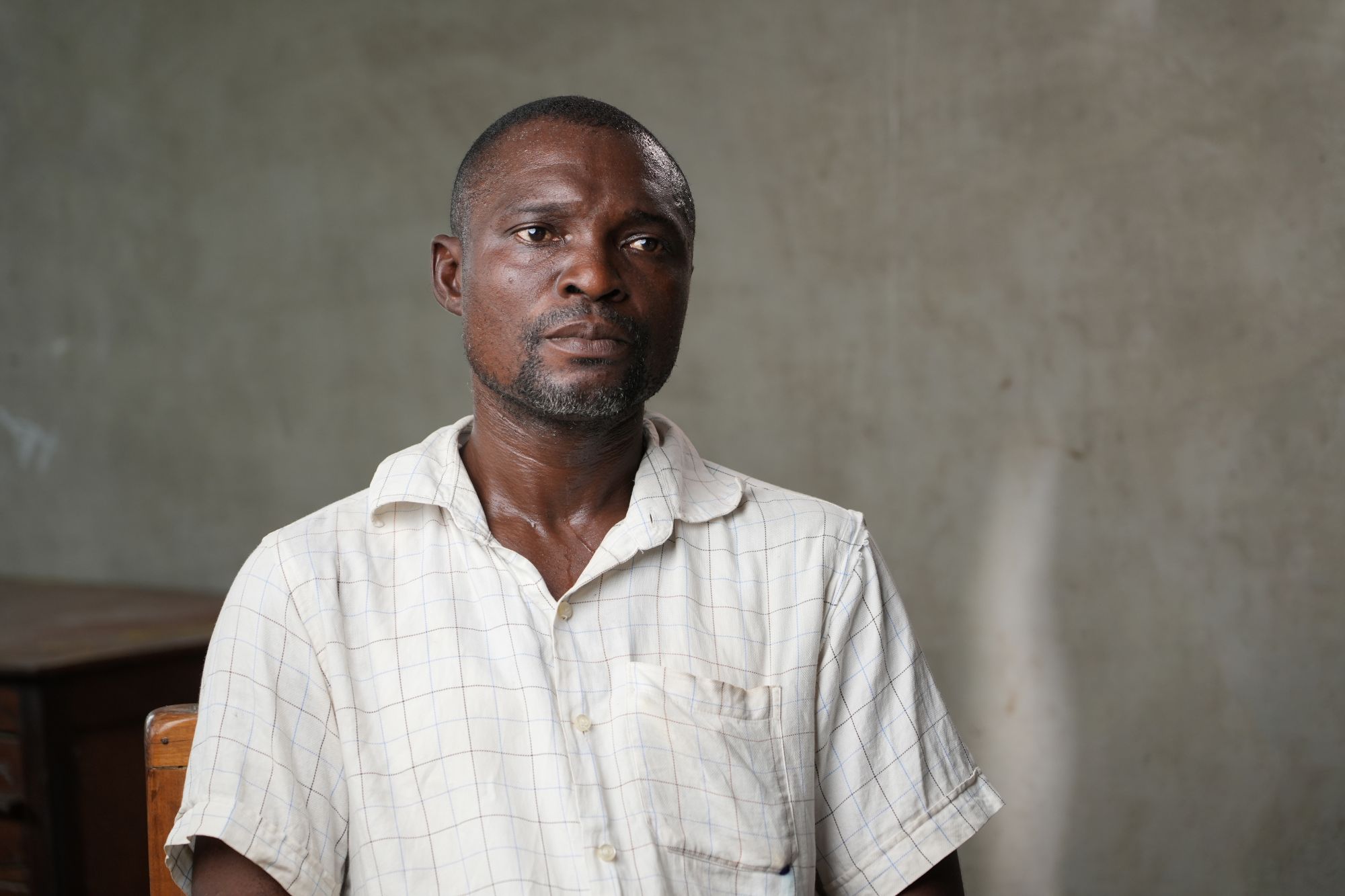
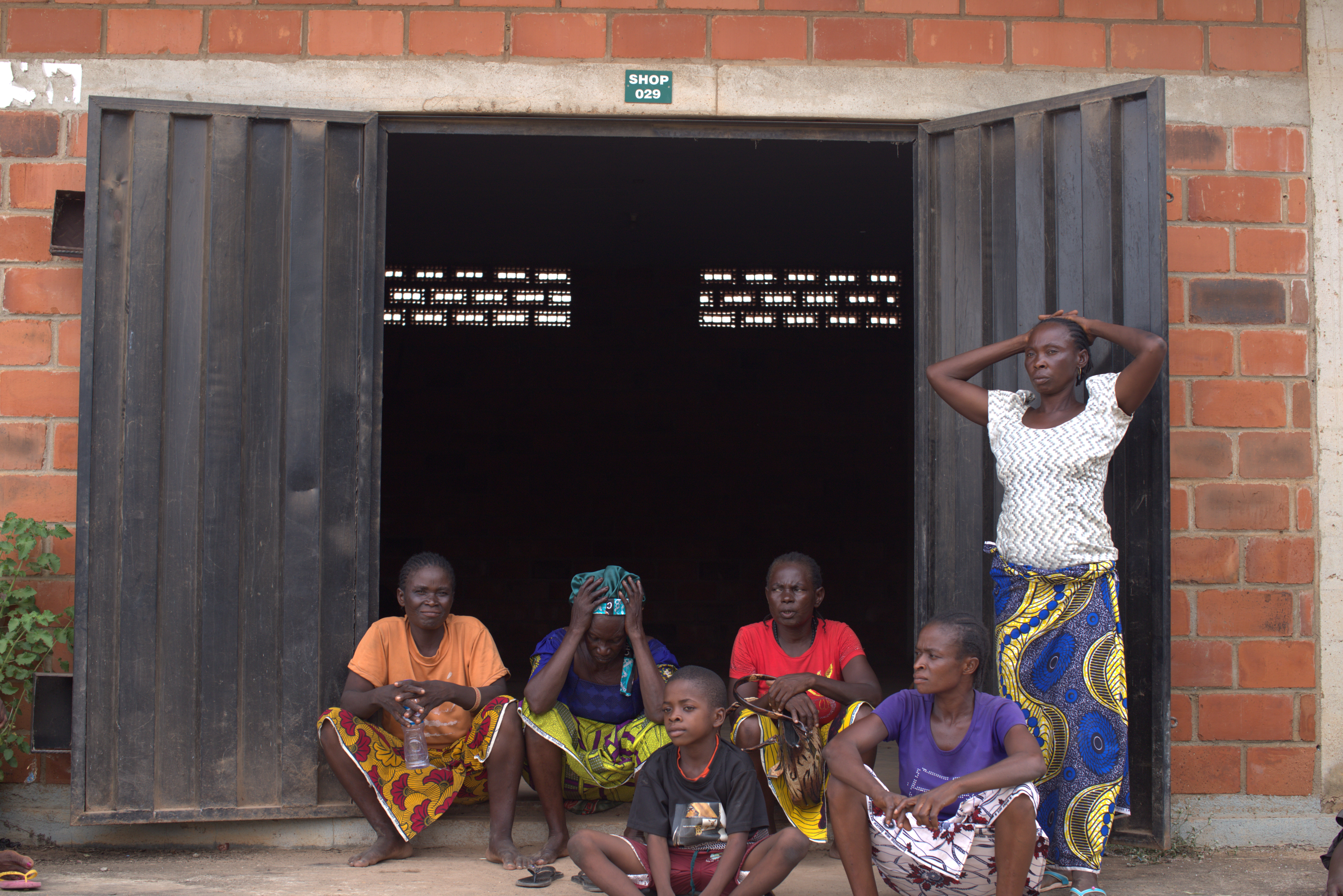
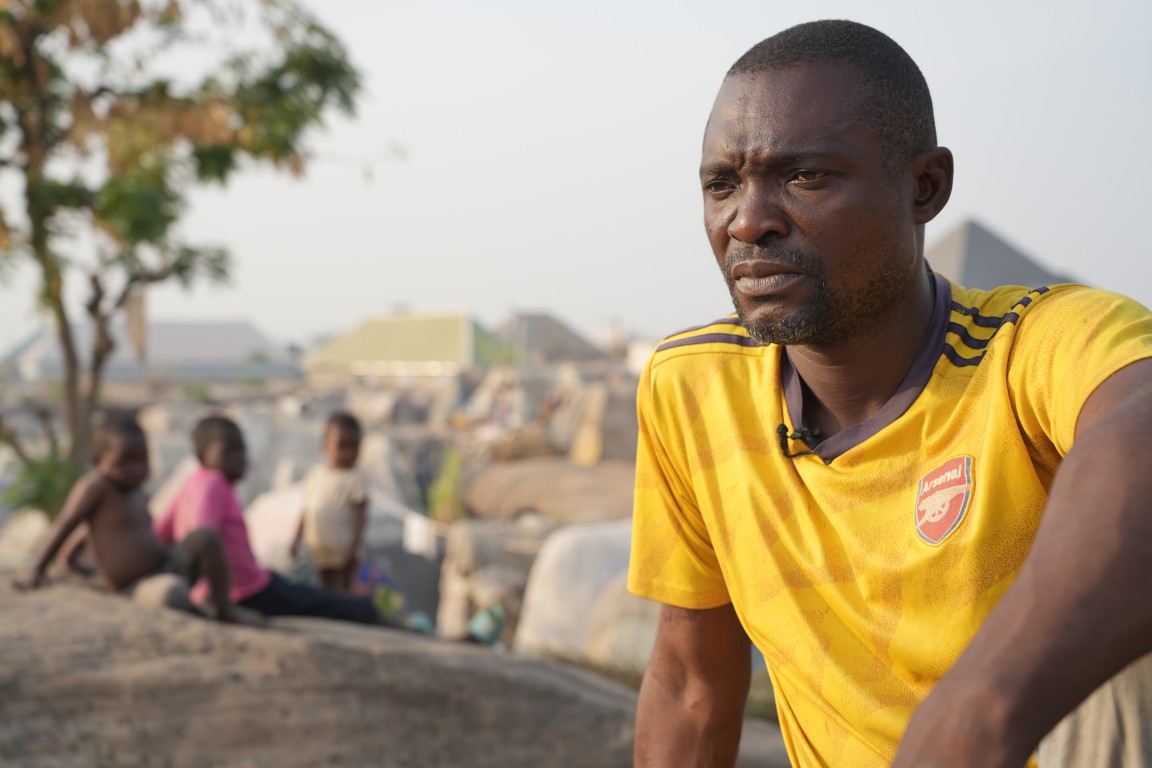
As Pastor Barnabas walks through the camp, he points out the makeshift tents in every direction. There are hundreds of them, small huts where people are huddled, seeking refuge from the sun. Thousands of people live here, in an informal camp for internally displaced people (IDPs), in Benue State in northern Nigeria. “Each and every one you see here—we are all Christians,” he says. “We are displaced because of violence.” He speaks with a determined, authoritative voice. You can see the compassion register on his face as he talks, but there is something else, too: a forcefulness that comes from a righteous anger that he and his church family have ended up in a camp like this.
It’s one of many similar IDP camps across sub-Saharan Africa, where 16.2 million Christians have been forcibly displaced—many due to violence. Many of those millions are Christians like Pastor Barnabas, who face attack simply because they follow Jesus.
Even though so many people are affected every year, this displacement crisis often isn’t recognized by the wider world. It’s something Pastor Barnabas finds frustrating and heartbreaking: “Millions of Christians are displaced, here in Nigeria. Millions of Christians are displaced in the whole of Africa. The news doesn’t care about it, politicians don’t talk about it, government don’t talk about it, global politics don’t talk about it. Nobody talks about it. We are remaining in darkness. Tell me: How that would make you feel? Being forgotten, being disregarded?”
‘A terrible place to live’
Pastor Barnabas gets to his tent, and stoops down to show it. Even though he and his family have lived in the camp for almost five years, their home is made of whatever materials were available. “We don’t have accommodation, we don’t have houses to live in,” he says. “We can only go and pluck palm leaves and use mosquito nets to construct it. And that is how we stay: We don’t have any privacy, me and my children.”
or a family with five children, the tent is far too small. Pastor Barnabas gestures to the four sides: “From here to here, it’s 1.5 meters (about 5 feet). From here to here, it’s 1.5 meters. From here to here, it’s 1.5 meters. It’s smaller than a double mattress. I don’t have a bed.
“Because my tent is too tiny, I can’t stay with my children,” he continues. “Three of them stay here with me and my wife. The rest of my children join with my neighbor. When day breaks, they come back to stay with me. His role is to pastor the believers in the camp. During the day, you’ll mostly meet women and children. Pastor Barnabas explains: “Most of the men—they have gone out looking for work to do, in order to get daily food. But yet, it will not be enough for a meal for a day.” Many of these Christians have left behind farms—places where they would be able to get food for their families. But they would be in extreme danger if they venture there.
Every day, Pastor Barnabas sees the men in the camp weigh this terrible choice. “This hunger leads many of them to go in search of food to eat where they are being attacked by the militants,” he says. “They have no option, they have to go back there again—and when they go, they are attacked again.”
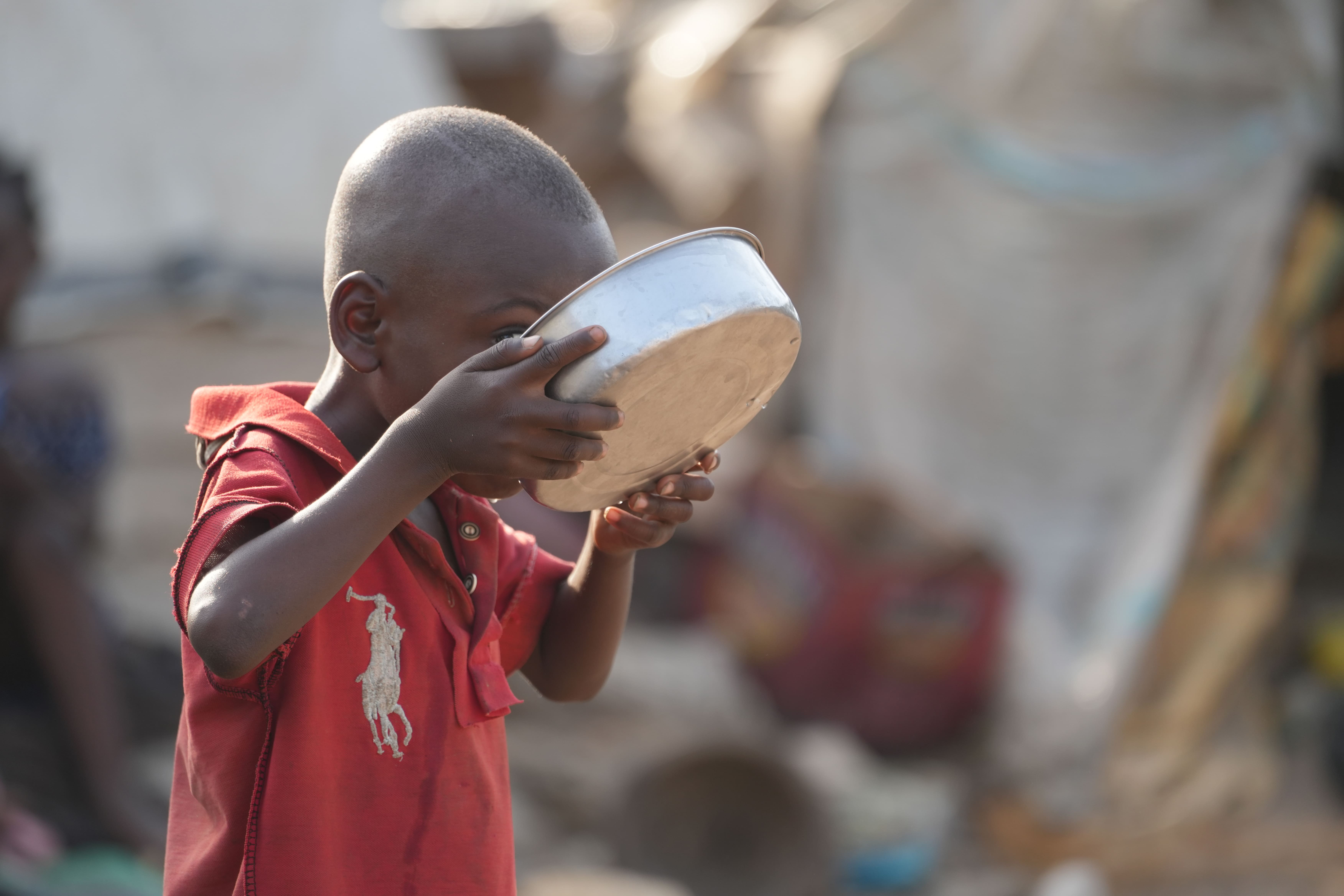
The IDP camp is a bit safer, but the living conditions are appalling. “It is not easy to live in IDP camp. It is a terrible place to live,” says Pastor Barnabas bluntly. “In the IDP camp, we don’t have good hygiene, we don’t have water, we don’t have toilets, we don’t have good sanitation. Many people are dying. Only last week, as I am talking, we lost eight people in this IDP camp.”
People wouldn’t live in a camp like this if they had any other choice. They only live here because it’s worse outside the camps—because of the horrendous persecution that has displaced them.
‘I was attacked by the Fulani militants’
Every year, thousands of Christians in Nigeria and across sub-Saharan Africa are murdered for their faith. Open Doors’ 2024 World Watch List research shows that about 95% of believers killed last year for their faith are in sub-Saharan Africa. More Christians were killed for their faith in Nigeria than the rest of the world combined. And that doesn’t include the huge numbers of people who are injured, abducted, face sexual violence, or lose their homes and livelihoods.
Pastor Barnabas can easily empathize with the displaced women, men and children who have faced this violence. He’s been through exactly the same experience.
“I was on the farm with my brother, Everen, and his wife, Friday,” he remembers. “We were walking when we heard rapid shooting of guns and other sounds. We didn’t know what was happening. We saw people running in different directions. We didn’t know that the militants had surrounded us.”
“We didn’t know that the militants had surrounded us.”Pastor Barnabas
The community was being attacked by Fulani militants, a group of Islamic extremists who are responsible for many of the violent attacks in north central and central Nigeria.
“We began to ask each other, ‘What is happening?’ and said, ‘We should run, we should run’,” he says. “Some of them came with guns, some of them came with machetes, some of them came with sticks.”
Tragically, Everen and Friday weren’t able to escape their persecutors. It’s been almost five years, but the pain is still raw for Pastor Barnabas. “My brother was shot by the militants, and my brother’s wife was also shot and then macheted and killed by the militants,” he says.
Lasting injuries
The attack kept going. Pastor Barnabas couldn’t stop to help his brother and sister-in-law, or even to retrieve their bodies. “I kept running,” he remembers. “Then the militants divided themselves and one of them followed me.”
This man tried to attack Pastor Barnabas with a machete, but accidentally dropped it. “He proceeded to remove his stick and hit me on my hand, and my hand was badly broken,” Pastor Barnabas says.
“If not for God’s intervention, if not for God’s love, I wouldn’t be where I am today.”Pastor Barnabas
Years later, he is still affected by these injuries. The attack caused long-term damage and, while he managed to gather enough money to pay for initial surgery, he can’t afford to have the metal in his hand removed. Without a second operation, he can’t use his hand properly. It’s a daily reminder of the horror he experienced at the hands of the militants.
He knows it could have been even worse. The only reason the brutal attack stopped without Pastor Barnabas being killed was because he was running in the direction of police. “Thankfully, I was close to the main road and there was a checkpoint with police officers,” he says. “The officers heard us and started shooting into the air. The militant couldn’t harm me the way he wanted. He became scared and ran back, and that was how I was saved.”
Despite the horrendous ordeal, Pastor Barnabas is grateful to God that his life was saved. “If not for God’s intervention, if not for God’s love, I wouldn’t be where I am today,” he says. “I hand everything over to God; let the will of God be done in my life.”
Why was Pastor Barnabas attacked?
Attacks like this one happen countless times in northern and central Nigeria and in nearby countries. Sometimes Fulani militants are the perpetrators—in other attacks, Boko Haram, the Islamic State group (ISWAP) or other jihadist groups are responsible for the violence. Their motivation is clear: to destroy as many Christians and Christian communities as possible and establish a caliphate (an Islamic state).
“We discovered that this thing [violent attack] is because we are Christians,” says Pastor Barnabas. “They want to convert us to being Muslim, as they are.” The attackers take land and other spoils; some victims of these attacks aren’t believers, but research and first-hand testimonies both demonstrate that Christians are being particularly targeted for their faith.
“The reason why we know that they are attacking us because we are Christians is because, when they come to attack us, they call us ‘capari,’” Pastor Barnabas explains. “It means you don’t have any religion.” The militants don’t value their lives, because they are considered infidels.
He lives with the impact of his individual attack every day, but Pastor Barnabas wants to make clear that it is a far, far wider problem. The huge numbers of Christians in IDP camps are there because they have fled this sort of violence, or the threat of it. “In this camp, many people are affected, many are injured, many are killed or their loved ones have been killed,” he says. “This affected not only my family, not only in the particular IDP camp I’m living, but there are millions of Nigerians that are being displaced. And it is not only in Nigeria these things are happening. They are happening in the whole of Africa.”
Permanent scars
When a Christian community is attacked by a militant group, the effects are long-lasting. As well as the terrible loss of life, it removes any means of getting an income, or future opportunities for the children of affected believers. “Now, I have lost everything that I had. Everything in my home and village was burned; I was left with nothing,” says Pastor Barnabas. “I cannot take care of my children. I cannot feed them. I cannot take care of my family. My children now, they are no longer in the school. This has affected them.”
He continues: “As a father, the Bible says we should bring up a child in the way of God – when he grows up, he will not forget this way. But now, as a father now, what example will I give to my children when they grow up? Will they say: My father did not help me and I didn’t have a house? They were living a godly life—but now, because of this, they are influenced by bad people.”
“People ask: ‘If our God is alive, then why would He allow us to pass through this kind of a problem that we are in?'”Pastor Barnabas
Pastor Barnabas also sees how the trauma of this violence, and the ongoing desperation his church family experiences, challenges their faith. Many join in his services in the IDP camp, praising God in the face of this persecution—but many also question why this is happening to them.
“People ask: ‘If our God is alive, then why would He allow us to pass through this kind of a problem that we are in? Why are we not seeing God’s intervention?’” says Pastor Barnabas. “Their minds have been discouraged, and that makes them ask these kinds of questions. Many people are losing their hope in God because of the situation they are in.”
He also sees how hard it is to remain faithful to God when you don’t know where your next meal will come from, or when you are watching your children suffer. He has even seen some of the Christian women in the IDP camp turn to prostitution, in order to get money to feed their families.
One of the tactics of persecutors is to disgrace Christians so much that they question their faith—in Nigeria, this often means robbing men of their traditional role as providers, and sexually assaulting women, leaving them regarded as shamed or damaged by the surrounding community. Whatever the tactic, the result is the same: the church’s light is diminished. Pastor Barnabas is desperate to help believers in his camp. “I don’t have anything to give them,” he says. “We can only pray together and share the word of God together. As a pastor, I am supposed to take care of these sheep. So, it makes me as a pastor …” he trails off.
“I feel very, very bad.”
Persecution remains a real danger for all Christians in this region. Even the IDP camps don’t have proper security, and believers are fearful and vulnerable to violence, including sexual violence. And Pastor Barnabas’s ordeal isn’t over. Even while he was speaking with Open Doors partners, he heard the terrible news that Ifa, another of his brothers, had been attacked by Fulani militants while trying to gather food. The militant struck him on the head with a machete, and he nearly died. It’s a stark reminder of the constant, ongoing dangers facing Pastor Barnabas and the other Christians in this camp and throughout Nigeria.
A confident hope
Despite all he has experienced, Pastor Barnabas knows he can be sure of God’s faithfulness. “God has been helping and He’s the one that has been sustaining me and has kept me till today,” he says. “That’s the reason why I still strongly hold on to Him.
“I will not lose my confidence in God. And I will always encourage them that, no matter what should be the situation, they should still believe God that, one day, we shall come back to our ancestral homes.”
He continues: “What I want to say is, whatever has happened to us, we should believe that God still exists. Everything has its own time. It does not matter how long we have been in this camp—a day will come when God shall take us back to our ancestral homes. It’s over four years that we have been in this place. I did not come here with anything, but God is using individuals and groups to take care of me.”
Your gifts and prayers at work
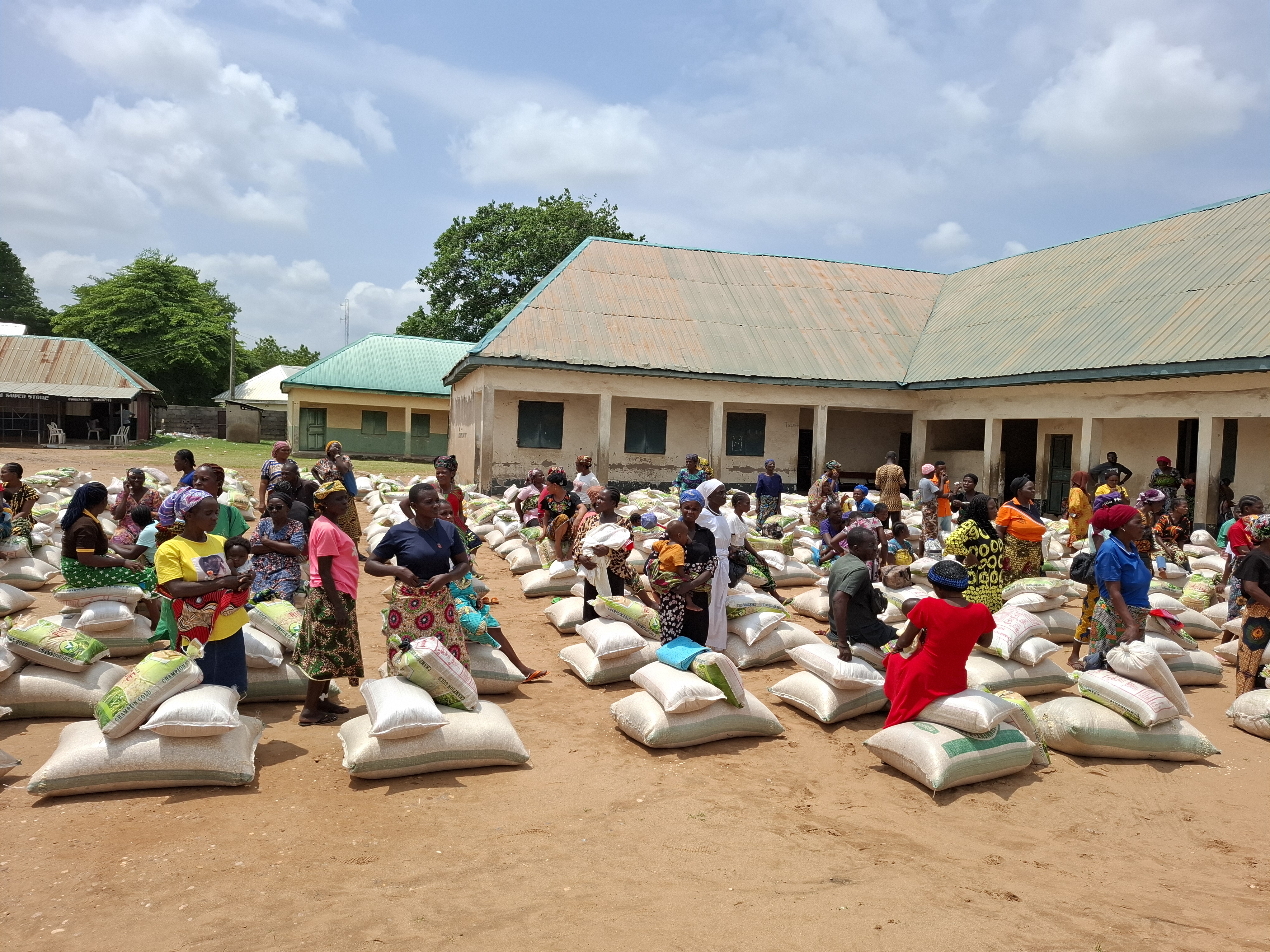
Thanks to your support, Open Doors local partners have been able to provide emergency food packages to IDPs in Pastor Barnabas’ camp. “If you are hungry, you will lose your confidence in God; if you are sick, if you are not strong, you may lose your confidence in God.” This vital supply of food isn’t just meeting people’s physical needs – it can help them persevere spiritually too, giving confidence that God hasn’t abandoned them when He uses local Open Doors partners as His hands and feet. Local partners are also planning to provide skills training and trauma care, to support long-term resilience and self-sufficiency. Open Doors local partners were also able to help with Ifa’s urgent medical bills, and are paying for Pastor Barnabas’s operation on his hand.
Pastor Barnabas is keen to send thanks to the Open Doors supporters—people like you—who make this possible through their prayers and gifts. “Brothers and sisters, you have been very supportive in the area of food particularly in this IDP camp,” he says. “We have been starving, but any time it becomes critical, you assist us; we are very grateful. Recently you provided us with corn, rice, beans and other things.
“I want to use this opportunity to say thank you for your ministry. It has been a help for us. If not for the help of your ministry, I don’t think it would be easy for us to live. But with the aid of this ministry, they cared for us. They took us along as brothers and sisters. They cared for us as mothers, as fathers and as sisters.
“So, I am very, very grateful. My prayer for [you] is that God Almighty will remember [you] the way they remembered us. May God Almighty strengthen [you] the way they strengthened us.
“We are grateful as a family. I am grateful. As an individual, I am grateful. On behalf of the IDP camps and especially in the ministry where I am, we are grateful, we are saying thank you. Thank you, thank you, God bless you.”
‘[God] is the only One that can help us’
There is still so much danger and persecution in the region, and the believers Pastor Barnabas cares for long for a time of safety, security and plenty. They want to go home. They want the violence to end. And they want to heal.
When asked what he is praying over the situation, Pastor Barnabas says, “My prayer is that God Almighty should intervene into this case. He should fight this battle for us, because the battle is not ours, it is His. So, our eyes and our hope are on Him. He is the only One that can help us. Without Him, no man can help us.”
He adds: “The Bible says ‘I will fight the battle for you and give you rest.’ If God Almighty will fight the battle for us, I believe a day shall come that we will be at peace. We will live a good life. Even those things that we lost, God will restore back. He did it to people before; He did it to Job.
“I believe that we will not be an exception. So, I say to my people, the Christians in the IDP camp, I believe that God lives high and lives forever in the name of Jesus. I am praying that God should help all of us to still have confidence and hope that it is going to be well with us. That is my prayer.”
Pastor Barnabas knows how vital the support and prayers of his worldwide church family are. “If there is any where you can contribute yourself, contribute in a way to help us Christians in the IDP camp, please do it and God will bless you,” he says, “and join together with us to pray that God Himself should be our defender and that God should preserve our lives—that God would sustain us and keep us.”
Thousands of people in Ethiopia are evacuating after warnings of increasing seismic activity around a once-dormant volcano. The government says up to 80,000 residents have been impacted by earthquakes in the Mount Dofan region. Now, people in rural communities are fleeing their homes as the volcano shows signs of a possible eruption.
A huge jets of smoke and mud is erupting in the Dofan volcano mountain located in the Afar region, Ethiopia (January 3, 2025).
In the past 7 days, Dofan volcano has had 27 quakes of magnitudes above 4 and up to 5.1.
🚨🇪🇹⚡️5.1 MAGNITUDE ⚠️ EARTHQUAKE HAS HIT ETHIOPIA AGAIN Over 30 homes have collapsed they have had an earthquake swarm of 50 large quakes in 3 days from 4.0 to 5.6 and over 150 2.0 to 2.9 quakes.
They have many volcanoes in the region and a major dam that could crack some… pic.twitter.com/y1H6vHwIEf
Also let’s not forget that this is where Africa is actually SPLITTING IN TWO as the East African Rift zone continues to split and these earthquakes and volcanic eruptions are helping to speed that up! Prayed up and prepped up, time is short!
You can support this ministry and keep us on the internet using the links below. Patreon is gone so now we havePayPal, Cash App and Buy me a Coffee as our online options. The new buy me a coffee link is below.
The pretext is to jointly contain Russian and Iranian influence in the broader region amidst their recent setbacks in the Levant.
Bloomberg published a detailed piece on Wednesday about how “Russian Guns, Iranian Drones Are Fueling Sudan’s Brutal Civil War”. The content is self-explanatory and presents the Sudanese Armed Forces’ (SAF) change of fortune in the nearly two-year-long civil war as the result of those two’s backing. Russia provides fuel, arms, and jet components while Iran supplies arms and drones in exchange for privileged access to Sudan’s mineral wealth (particularly gold) and the promise of Red Sea naval bases.
The Russian modus operandi builds upon the model explained here in early 2023 whereby Moscow provides military support to its Global South partners to defend them from externally connected threats to their national models of democracy in exchange for resource and other rights. Iran’s approach is similar but more ideologically driven given the SAF’s closeness with political Islam since former leader Omar al-Bashir’s rise to power in 1989. Both want to make up for recent setbacks in the Levant.
Russia risks losing its bases in Syria following the joint American-Turkish regime change there while Iran’s regional Resistance Axis partners have taken a beating at the hands of Israel. Egypt and Turkiye are also allegedly backing the SAF while the UAE and its Libyan ally Haftar are accused of supporting their Rapid Support Forces (RSF) rivals. Even so, Emirati mineral companies are still active in the SAF-controlled Port Sudan that serves as the country’s temporary capital, thus highlighting the complexity of this conflict.
Readers should also be reminded that “Russia’s Veto Of The UNSC Resolution On Sudan Saved It From A Neocolonialist Plot” last month after the UK tried to turn it into a Western vassal by unsuccessfully attempting to create the legal pretext for a foreign military intervention there to that end. Such a threat still remains though as suggested by Bloomberg’s latest piece, which is clearly aimed at manufacturing consent for more Western meddling there on the basis of jointly containing Russia and Iran.
Trump 2.0 is expected to be tough on Iran, and while he himself wants to improve ties with Russia, he might be pressured by the hawkish forces around him into ramping up the US’ involvement in Sudan so as to kill two birds with one stone by weakening their influence in the broader region. Both are on the backfoot as was earlier explained so the temptation to do so might be too enticing. This could take the form of more sanctions, clandestine arms shipments to the RSF, and intelligence support to that group.
Anything more significant isn’t expected since the continued Houthi threat makes a naval blockade unfeasible for now while a no-fly zone would require a sustained air campaign that none of the US’ regional partners, first and foremost among them Egypt, supports. Cairo could also complicate whatever Washington wants to do since it has a land border with Sudan and considers the SAF “too big to fail” due to their shared interests vis-à-vis Ethiopia with whom both are feuding over its Grand Renaissance Dam.
In any case, Bloomberg’s article is meant to facilitate whatever more robust policy Trump 2.0 might promulgate towards Sudan, though it’s of course also possible that he won’t allow the US to get dragged deeper in what could turn into the next “forever war”. From the perspective of the US’ grand strategic interests as his MAGA worldview interprets them, it’s best for the US to stay out of this imbroglio and focus instead on brokering peace in Ukraine in order to then “Pivot (back) to Asia” for containing China.
This emerging front of the New Cold War will likely see the Sino-Russo Entente more closely coordinate against the US-led West there.
Africa is increasingly figuring into major countries’ and organizations’ discussions due to its growing importance in global affairs. The UN expects that more than half of the world’s population growth by the 2050 will occur on that continent, with the number of people in sub-Saharan Africa doubling by then. This will open up new market and labor opportunities alongside the existing resource ones that have already attracted international interest, but it’ll also lead to developmental and humanitarian challenges.
The Kazan Declaration that was just agreed to during the last BRICS Summit speaks highly about helping and empowering Africa during this transformational period, but these countries – whether as a whole, through minilaterals, or bilaterally – will inevitably have to compete with the US there. The latter’s grand strategy takes several forms that’ll be briefly described in this analysis, but it altogether aims to impede others’ efforts to mutually benefit from these processes while exploiting Africa as much as possible.
The most visible manifestation of this strategy is the continued provisioning of humanitarian aid, which sounds noble at first glance but is actually driven by ulterior motives. This form of support has been weaponized over the decades to cultivate and co-opt corrupt elites in order to institutionalize relationships of dependence that are difficult for recipient countries to liberate themselves from. The purpose is to create levers of influence that can be wielded to legitimize lopsided deals with the West.
BRICS – which from here on out refers to either the group as a whole, minilaterals therein, or individual members – can counteract this by assisting their African partners with agricultural development so that they eventually become less reliant on American aid. Major grain producers like Russia can also provide more of their own no-strings-attached aid during the interim. A balance must be struck between meeting immediate needs and moving countries closer to self-sufficiency over the long term.
The next way in which US strategy towards Africa manifests itself is through the “Africa Growth and Opportunity Act” (AGOA) that allows for duty-free trade between them. The downside to this arrangement is that the US has removed countries like Ethiopia and Mali from it as punishment for them refusing to comply with its political demands. In other words, while there are certainly some economic benefits to be had from this arrangement, they can be cut off if countries don’t do what the US wants.
BRICS’ response has been to liberalize trade and investment with Africa as a whole, which is easier than ever due to the creation of the “Africa Continental Free Trade Area” (AfCFTA). China leads the way in this respect due to its much larger and more developed economy relative to other BRICS members, but Russia, India, and the UAE are also making important strides in this direction too. The goal is to diversify these countries’ trade partnerships so that they’re not destabilized if the US kicks them out of AGOA.
Building upon the trade dimension of this strategy is the financial one wherein the US takes advantage of the West’s leading role in global financial institutions like the IMF and World Bank to offer strings-attached loans to desperate countries. These are then weaponized to further entrench their lopsided trade and investment ties while also coercing their leaders into making certain political concessions. The end result is that recipient countries lose more of their sovereignty and risk socio-political unrest.
China has taken the lead among BRICS countries in providing no-strings-attached loans through its Belt & Road Initiative (BRI) to finance mutually beneficial megaprojects and help struggling countries avoid Western debt traps of the sort described above. BRICS’ rising role as a financial actor in its own right, particularly with regard to the New Development Bank that it created, could complement these efforts to counteract claims that African states are just trading Western dependence for Chinese dependence.
Moving along, the US wants to guide Africa’s journey through the “Fourth Industrial Revolution”/“Great Reset” (4IR/GR) by bringing the entire continent online through December 2022’s “Digital Transformation with Africa” (DTA) initiative. The Carnegie Endowment’s report from March 2024 noted that not much had been done with its promised $800 million by then, but if any progress is made and this isn’t just a slush fund or PR stunt, then it would likely lead to continental-wide digital surveillance.
African countries could take a page out of Russia’s and some other BRICS members’ playbooks by passing laws about data localization, which prohibits sending users’ data abroad. That’s not a silver-bullet solution to digital surveillance but it provides the best balance possible between much-needed foreign digital investment into (in this case developing) economies and national security. In parallel, Africa countries should court such investment from BRICS states, with China already being a prime partner.
Resource extraction is another element of the US’ grand strategy towards Africa, which is being prioritized through the Lobito Corridor that was unveiled by the US and the EU in September 2023 for facilitating the export of Southern African minerals to the Western market. This region is rich in copper, lithium, and other resources that are indispensable for the 4IR/GR in which the US and China are fiercely competing to shape the contours of the future global economy.
The most surefire way to ensure that mineral-rich African countries aren’t exploited is to emulate Tanzania’s 2017 “National Wealth And Resources (Permanent Sovereignty) Act” that forbade the export of raw materials for processing. This is meant to encourage the construction of a domestic processing industry to add value to these exports and provide jobs for its burgeoning population. Global costs will rise if enough countries copy this policy, but it would be for the betterment of their own people.
Segueing into the more nefarious forms of US grand strategy towards Africa, observers can’t forget about the numerous information warfare campaigns that it’s waging across the continent. These are aimed at discrediting its rivals like Russia, stoking inter-state discord such as between BRICS members Ethiopia and Egypt for instance, and exacerbating preexisting internal (usually identity-centric) differences in order to destabilize fragile states through HybridWarfare as punishment for not capitulating to the US’ demands.
Better “Pre-Bunking, Media Literacy, & Democratic Security” policies are the only way to enhance the defenses of targeted states and societies, but they’ll take time to be applied even in the best-case scenario so some trouble is bound to follow these campaigns. Reputational damage to BRICS countries can be mitigated through counteroperations, inter-state discord can be managed through BRICS mediation, while internal conflicts might require security assistance from some BRICS states.
The last point directly leads to the next form in which the US’ grand strategy towards Africa manifests itself, namely through the waging of proxy wars like what’s happening in the Sahel. Mali, Burkina Faso, and Niger expelled French and US forces over the past few years, formed an alliance prior to exploring a confederation, and were then targeted by more foreign-backed terrorist and separatist attacks. France and the US are working hand-in-hand together with Ukraine to punish those three countries for this.
Russia has taken the lead in helping its new regional partners through the deployment of military advisors and PMCs via a strategy that was elaborated on here for those who’d like to learn about it. Other BRICS countries can help with arms exports and intelligence support if they have the capabilities and will to do so, though most don’t and are instead expected to sit on the sidelines of these proxy wars. If they intensify, then it can’t be ruled out that some formal Western military intervention might follow.
Therein lies the final form of US grand strategy, direct military action against African countries, which is employed on a case-by-case basis whose motives widely vary from Somalia to Libya. The infamous AFRICOM organizes such activities that are greatly facilitated by the archipelago of American bases, including unofficial ones, that spread across the continent since 2001. The current focus on the Sahel might lead to new drone bases in the Ivory Coast from which to “surgically strike” targets in the north.
Once again, Russia is the only BRICS state that has the capabilities and will to counteract these threats, which it could do by empowering its partners (including non-state ones) to retaliate against those states that host US bases and/or target those facilities directly. The NATO-Russian proxy war in Ukraine could also be intensified as an asymmetrical response to throw the West off balance, but the West could do the same to Russia as revenge for foiling its plans in Africa, thus linking these two New Cold War fronts.
The takeaway from this analysis is that BRICS has a key role to play in helping Africa defend itself from the US’ hegemonic plots, but only Russia will do so in a security sense while China’s economic support will remain unmatched. Accordingly, this emerging front of the New Cold War will likely see the Sino–RussoEntente more closely coordinate against the US-led West there, which’ll provide opportunities for other BRICS states like India to present themselves to African countries as reliable balancers.
Russia’s support of multipolar processes in West Africa has dealt a heavy blow to French hegemony there, which France has responded to by waging a proxy war on Russia in Mali while going on the strategic offensive in the South Caucasus and Eastern Europe.
French Defense Minister Sebastien Lecornu claimed in an interview that Russia is his country’s “greatest threat” apart from terrorist groups. He pointed to its “aggressive” actions over the past year, “not only to our interests in Africa, but also directly to our Armed Forces”. Lecornu also accused Russia of “waging an information war” and “militarizing new environments, including the seabed and cyberspace.” The reality is that Russia does pose a threat to France, but only to its hegemony, not to its legitimate interests.
Russia’s African policy, which readers can learn more about here, seeks to accelerate multipolar processes there. This has taken the form of supporting the former French colonies of Mali, Burkina Faso, and Niger, not only bilaterally, but also multilaterally with regard to their newly formed Sahelian Alliance and Confederation. Their patriotic military leaderships envisage reducing their outsized dependence on France by relying more on Russia in order to regain as much of their lost sovereignty as possible.
In tangible terms, this has seen them replace France with Russia as their preferred anti-terrorist partner, with some speculating that the immediate quid pro quo is privileged Russian access to their resources. The short-term goal is to restore stability, after which the medium-term one of further disengaging from the French “sphere of influence” can more confidently be pursued, ideally by introducing a new regional currency to replace the CFA Franc that Paris continues to exploit for enriching itself at their expense.
These two developments threaten French hegemony since the first impedes its efforts to divide-and-rule these countries while the second has traditionally been responsible for buoying its economy. Taken together, Russia’s support of these multipolar processes does indeed deal a heavy blow to French interests, but once again, only to its hegemonic interests and not its legitimate ones. France can’t acknowledge the way in which Russia threatens it in Africa since the dark truth makes it look very bad.
It won’t go down without a fight, however, which is why it’s waging a proxy war on Russia in Mali together with the US and Ukraine through their patronage of Tuareg separatists and Islamist groups. Other battlefronts could be opened against the Sahelian Alliance/Confederation such as if Franco-American forces in the Ivory Coast try to destabilize southern Mali and Burkina Faso. Jihadist violence in the latter, which is already approaching critical proportions, could also soon worsen with their support.
France isn’t just playing defense since it’s also going on the strategic offensive against Russia in the South Caucasus through its efforts to accelerate Armenia’s pro-Western pivot. The ultra-nationalist Armenian diaspora that it hosts has played a crucial role in this process. France is also selling military equipment to Armenia too in order to exacerbate Russia’s suspicions of its intentions. Close Russian-Azerbaijani ties and impressively pragmatic Russian-Georgian ones put a check on the West’s plans though.
If they ever were to succeed, they’d pose a direct threat to Russia’s legitimate interests by provoking a major conflict along its southern periphery, thus making France’s meddling in the South Caucasus much more threatening in an objective sense than Russia’s support of multipolar processes in West Africa. The same goes for the other strategic offensive that France has gone on against Russia since losing its “sphere of influence” in the Sahel by signaling interest in conventionally intervening in Ukraine.
French President Emmanuel Macron, whose spree of foreign policy mistakes was analyzed here, has since toned down his rhetoric but nevertheless still isn’t ruling out such a scenario. The reason why this is so dangerous to flirt with is because it could lead to the outbreak of conventional NATO-Russian hostilities in Ukraine that might escalate into World War III by miscalculation. France knows the enormity of what’s at stake but it’s still recklessly considering this course of action as revenge against Russia.
Reviewing the insight that was shared thus far, Russia’s support of multipolar processes in West Africa has dealt a heavy blow to French hegemony there, which France has responded to by waging a proxy war on Russia in Mali while going on the strategic offensive in the South Caucasus and Eastern Europe. Therefore, it’s not Russia that’s the “greatest threat” to France, but France that’s a “great threat” to Russia and the world in general due to the havoc that it’s wreaking in three separate regions out of spite.
You can support this ministry and keep us on the internet using the links below. Patreon is gone so now we havePayPal, Cash App and Buy me a Coffee as our online options. The new buy me a coffee link is below.
This is for those of you who want a deeper understanding of the former and current geopolitical struggles in North Africa and the Middle East. This was submitted by Dr. Vladislav B. Sotirovic, his credentials and links are below the article.
The Middle East was the home of the earliest civilizations in the world’s history. The first urbanizations and literacy started there. The region of the Middle East usually covers the territories from the eastern littoral of the Mediterranean Sea up to India in the East. In a broader sense, geographically, the region encompasses territories of the East Mediterranean and Central Asia but many Americans followed by other Western academicians, politicians, and journalists regard as a single region the Middle East and North Africa (MENA).
The majority of the inhabitants of MENA have many things in common like the Arab language and culture, confession of Islam, etc., but on the other, different ethnic minorities exist in each of those regional countries while the Islamic religion is divided into two factions: the Sunni (majority) and the Shia (minority).
All states of the region of the Middle East and North Africa (MENA) can be selected into four ethnic-geographic sub-regions (groups):
1) The North African states;
2) The Persian Gulf States;
3) The Central Arab states; and
4) Iran and Israel.
The combined number of inhabitants of all of those states is more than 250 million (for the matter of comparison, in the EU 28, i.e. with the UK, there were some 500 million people). The region itself is experiencing culture and civilization back some 6000 years but the majority of the present-day nations are relatively new. In other words, except for Iran and Egypt, all other regional states appeared in their present form only in the last century, largely after WWI, but some of them even after WWII (Israel). The number of states in MENA can be fixed by taking into account at least three criteria: 1) The historical period; 2) Political conditions; and 3) Geopolitical perspective. Today usually is applied that there are 24 states (with Palestine) in the region of MENA (but with Turkey and Sudan 26). However, the state of Palestine is still not generally and formally recognized as independent, as it was expected to appear as such taking into consideration the results of the Israeli-PLO negotiations (Roadmap for Peace).
It is worth noticing that the first modern Arab country became Egypt of Muhammad Ali in the first half of the 19th century when due to the French (Napoleonic) occupation Egypt became familiar with some features of the “European progress”. As a result, Muhammad Ali started certain modernization reforms of the society like the creation of a modern and more effective governance organization, rational economic system, and a modern army restructured and reorganized according to West European principles of warfare at that time. It was established in Cairo as the first Western-type institute, the Egyptian Institute, in the Arab world with the crucial function of spreading out Western European (mainly the French) philosophers’ writings (like Russo and Volter).
The majority of the regional populations are Arabs and Muslims. Pan-Arabism is one of the focal political issues in MENA in the 20th and 21st centuries. In recent times, leadership within the Pan-Arab movement, however, initially passed to the hands of the Christian Arabs in Lebanon and Syria. Nevertheless, all political attempts to form some kind of United Arab Republic failed but there are successful stories of macro-regional economic integration, for instance, the economic integration of six states of the Persian Gulf as they created a Gulf Cooperation Council. Nonetheless, instead of the United Arab Republic existing an Arab League (est. 1945 with 22 member states today) which promotes better communication systems for the region using the Arabic language and the ARABSAT (the Arab Regional Satellite System).
Oil discovery and production are probably the focal special features of MENA (but particularly of the Middle East) in contemporary history. The economic and social development of all oil-rich Gulf countries depends almost totally on the policy of oil export and, therefore, for better mutual economic cooperation, Middle Eastern oil-producing nations established their Organization of Arab Petroleum Exporting Countries (the OAPEC) that is the regional variant of global OPEC (the Organization of Petroleum Exporting Countries). In fact, some 65−70% of global petroleum reserves are located in the territory of the Middle East. Oil extraction and refining play a significant role in both regional and world economies, and, therefore, have a significant impact on the welfare and politics of the majority of Western (post-industrial) countries (especially of G7).
A lack of a full type of Western “liberal democracy” is another crucial feature of MENA as today, regional forms of governance are ranging from pure authoritarianism (Saudi Arabia) to some forms of democratic experiments based on the Western pattern (Lebanon or Israel) which are followed by Muslim regimes governed by religious leaders (Iran after 1979). Out of 22 Arab League’s states today, 8 of them are republics (including the Islamic Republic of Mauritania and the Baath Socialist Republic of Syria), 7 are monarchies, 4 have a one-party rule, the UAE is a political federation of sheikdoms, Somalia that is, in fact, lacking functioning governance, and finally, Palestine with not clear governmental type and even statehood. In general, regarding politics, the region is still in evolutionary transition as a result of modernization, Westernization, and globalization including references to economic and educational development with current tendencies of the radicalization of Islam as anti-colonial ideology against the post-industrial Western imperialism and the Zionist Israeli (backed by the USA) policy of apartheid (segregation and discrimination) and ethnic cleansing.
An ancient conflict between two Islamic factions – the Sunni and the Shia Muslims – is another feature of the division of the region of the Middle East and North Africa. The first division within Islam was born soon after the death of his Prophet Muhammad in 632 A.D. when the Islamic world of Arabs became divided between those who had the pretensions to inherit the religious power after the death of the Prophet. They created two principal factions with different claims. The Sunni faction claimed that the religious power of the Caliph after 632 A.D. passed to Abu Bakr – Muhammad’s father-in-law, while the Shia faction (“Followers of Ali”) claimed the religious power to the cousin and son-in-law of the Prophet – Ali ibn Abi Talib. The assassination of the third Caliph, Uthman ibn Affan in 656, and the election of Ali ibn Abi Talib fueled the first armed conflict (civil war) among the Muslims which ended with the Battle of the Camel on November 7th, 656 in present-day Iraq in Basra between Aisha’s supporters (widow of the Prophet) and Ali ibn Abi Talib’s supporters (the fourth Caliph and son-in-law of the Prophet) who won the battle against Aisha. However, it was only after the murder of Ali, and a few years later, of his son Hussein ibn Ali in the Battle of Karbala on October 10th, 680 in present-day Iraq, that Islam went to a dogmatic and political split. The Shia Muslims reject the legitimacy of the first three Caliphs whom, however, the Sunni Muslims follow, having at the same time some doctrinal and political differences with the Sunnis. The biggest percentage of Shia Muslims today in the Middle East is in Iran (90−95%), Bahrain (65−75%), Iraq (60−70%), Lebanon (45−55%), and Yemen (30−40%).
The last important feature of the Middle East is the sectarian violence and its impact in some regional states. Several cases are going to be mentioned below:
The Saudi government is composed of Sunnis and the monarchy itself in power belongs exclusively to the Sunni faction which is in constant competition with the Shia Iran. The government of Saudi Arabia fears that the Shia theocratic Islamic Republic of Iran could create serious unrest within both the Saudi and the Gulf’s Shia communities. However, both Iran and Saudi Arabia, in fact, are pretending to become the leading power in the region.
The majority of Bahrain’s population is the Shia believers but there is a ruling Sunni monarchy. Inspired by the Arab Spring in 2011, the Shia believers started to demonstrate their political rights but without support from the US administration. The Bahraini Sunni governmental authorities and its allies, including Saudi Arabia, have violently cracked down on protests, killing hundreds of civilians.
In Iraq, for a long time, the country’s Shia majority had been oppressed by the Sunni regime in Baghdad. We have to keep in mind that in Iraq exist the most sacred religious sites for the Shia Muslims. After the fall of Saddam Hussein in 2003, they came to power and the Shia population began to target the Sunni community. The Sunni believers have been persecuted and tortured by the Shia death squads and in response to the increasing violence against them, Iraqi Sunnis have committed several suicide attacks and bombings. As a consequence, the Shia-Sunni religious sectarianism in Iraq exacerbated the nationalistic and fundamentalistic attitudes of the Shia Muslims in power and has contributed to the strengthening of the Sunni support to ISIS (ISIL, DAESH).
For Iran, the most important thing is to protect its regional interests among them the rights of the Shia population abroad. For instance, after the Iranian Islamic revolution of 1979 that brought the Shia government to power in Tehran, Iran began to fund and encourage the Shia revolts in the eastern region of Saudi Arabia which is rich in oil reserves. The Iranian government is also supporting the government of Alawite (a branch of Shia Islam) Assad in Syria, which bridges with Lebanon.
In Yemen, the Houthi rebels, located predominantly in the northern part of the country, are Shia Muslims and represent about 1/3 of the total population. The Houthis were able to force the resignation of President Hadi, recognized by the international community. Regardless of the fact that during the revolt in 2014−2015, Shia rebels took political control, the majority of Sunni tribes in South Yemen do not recognize the Shia authority. In 2015 it was formed a coalition of Arab states under the leadership of Saudi Arabia to support former President Hadi against the Houthi rebels, who are pro-Iranian. Large parts of the territory of Yemen are also under the control of the Sunni militant group al-Qaeda which is opposed to both Shia Houthi and the ex-government of Hadi. The Sunni al-Qaeda in Yemen has been several years targeted by the controversial US drone campaign inside of the country.
Finally, behind the Syrian civil war which started in 2011 is, in essence, sectarian violence. Syrian President al-Assad belongs to the minority of Alawite Muslims who are a branch of the Shia sect. The Alawites take their name from Ali ibn Abi Talib who was a cousin, son-in-law, and the first male follower of the Prophet Muhammad (Alawite = “Follower of Ali”). The protests against Assad’s rule started in March 2011 and have been violently repressed. Nevertheless, the Syrian civil war has in part contributed to exacerbating the feelings of hatred and resentment between the Shia and the Sunni communities in the country. During the conflict, Shia Iran and the Shia Hezbollah from South Lebanon, in the moment of greatest difficulty for Assad’s regime, have flocked to the side of President Assad to prevent the deposition. However, similarly, the Sunni fighters from Jabhat al-Nusra Front and the Sunni ISIS are fighting in Syria against Assad. We have to keep in mind that Jabhat al-Nusra is the Syrian branch of al-Qaeda and that the Sunni monarchies of the Persian Gulf and Sunni Turkey are financially and militarily supporting the Sunni opposition fighters in Syria.
The region of the Middle East and North Africa is an area where geography and history are important factors in the contemporary lives of the people. There are many native peoples of the region for whom MENA is considered as the Arab homeland. It refers to those lands in which the Arabic language (with all dialects) is spoken. It is, basically, a unique region in the world regarding geography, geopolitics, and geostrategy as here three continents are meeting each other (Europe, Africa, and Asia) and as the region which was a focal point of the development of the first civilizations. Geologically, its topography was transformed after the Ice Age from a climate that supported the grasslands and waterways into vast steppes and deserts. Around 2000 B.C., the pastoral people of Aryans, or called as well as Indo-Iranians migrated into India and West as well as Central Asia, including today’s Iran (Persia) and surrounding countries. Strategically, MENA was considered all the time to be an extremely valuable geostrategic territory as being a crossroad for trade, faith, conflicts, or cultural development.
In principle, the crucial mark of the region is the predominant Arab culture with some contrasts in the cultural habits between, for instance, Saudi Arabia and Egypt. Besides, the cultural features of several other ethnic and confessional groups of MENA give a more comprehensive picture of the region’s peoples and challenges.
Dr. Vladislav B. Sotirovic
Ex-University Professor
Research Fellow at Centre for Geostrategic Studies
The case raises suspicions about possible US involvement in Ukrainian terrorist attacks on Russian territory.
Lucas Leiroz, journalist, researcher at the Center for Geostrategic Studies, geopolitical consultant.
Apparently, it is increasingly difficult to hide the Westernparticipation in attacks against Russians abroad. In a recent report it was revealed that the US and its proxies had a secret plan to assassinate some commanders of the private military company Wagner Group in Africa. Wagner’s representatives would be in Mali at the time of the attack, which would make them easier targets than inside Russia. The case shows how in fact Washington and Kiev coordinate and jointly perform terrorism and sabotage actions against Russian citizens, which brings possible answers to other recent cases.
The plan was leaked by sources to an important western media outlet. The purpose of the operation would be to prevent the growth of Russian influence in Africa. As well known, the Wagner Group operates in some African countries, responding to requests made by the local governments themselves. Faced with the failure of initiatives by western countries – mainly France – to haltthe advance of terrorism in Africa, cooperation in defense and security with Russia has emerged as an alternative for some countries on the continent, which apparently worries western authorities.
It was reported in the media that the Ukrainian intelligence agency GUR planned to operate an attack in Mali, which would be commanded by Kiev’s officer Kirill Budanov. On that occasion, several Wagner officers would die at once, seriously damaging the Group’s presence in Africa – and consequently boosting the growth of terrorism, as Wagner combats criminal organizations on the continent. However, for reasons still unknown, the operation did not happen – perhaps because there were more serious priorities on the Ukrainian battlefield.
On the other hand, the report exposes a successful plan by the same agents interested in assassinating Wagner’s officials. The case supposedly occurred in Libya, where aWagner’s logistics aircraft would have been shot down. No details were given about the case, and there is no concrete data on what exactly the contents of the aircraft’s cargo would be. However, the report makes it clear that US and Ukrainian agents in fact operate together to kill Russian nationals outside the combat zone, which suggests answers to many other questions.
In several recent cases, Russian authorities have claimed that Ukrainian agents are involved in attacks against ordinary, innocent citizens, as well as against civilian infrastructure in the country’s demilitarized zones. In most cases, there is also a strong suspicion of US involvement, as Ukrainian forces are too weak to coordinate major attacks and intelligence actions abroad.
For example, Russian authorities have claimed on several occasions that the GUR was responsible for the attack on the Crimean Bridge, which took place in October last year. On that occasion, a truck driver who was transporting a bomb in his vehicle (apparently involuntarily) died after detonating the explosive, also killing two other civilians who were on the bridge at the time. In fact, knowing that the GUR planned to kill Russians in Africa and probably participated in the attack on a Wagner’s aircraft in Libya, the suspicions surrounding the participation in the Crimea case gain even more strength, since it is clear that terrorism is really a practice of the Ukrainian agency.
The same can be said for attacks against specific human targets. The homicides of Daria Dugina and Vladlen Tatarsky, both journalists with no military involvement, were the ones that made obvious the existence of Ukrainian terrorism abroad. Moscow identified those responsible for both attacks and exposed their connections with Ukrainian intelligence. In the specific case of Daria, US military informants even admitted Kiev’s responsibility. It only remains to be seen to what extent the Ukrainians would be acting “alone” in such incidents.
Kiev’s neo-Nazi regime has proved many times that it is not capable of acting alone. The actions of the Ukrainian armed forces are nothing more than the execution of orders coming from Washington. This becomes clear in the mere fact that the Ukrainian army and its allied militias continue to fight against the Russians despite being heavily weakened, without any possibility of reversing the military scenario of the conflict. So, it is to be expected that the same happens with Kiev’s intelligence agencies, which certainly work as mere proxies for the US, in addition to being extremely dependent on foreign aid to operate any kind of complex action – even more so when outside Ukrainian territory.
Knowing that Americans and Ukrainians planned togetherattacks against Russians in Africa, it is even more difficult to deny that the same certainly happened in the attacks inside Russian territory. Washington will certainly not admit this and will try to blame its neo-Nazi proxy alone, but it is evident that the Ukrainians do not have the operational force, technical capacity or even autonomy to make these decisions on their own. In this sense, as American participation in brutal crimes committed by Ukrainians becomes clearer, the greater the need for an international reaction to NATO, which must begin to be seen as an organization that sponsors terrorism.
The crisis also reflects the failures of Western foreign policies.
Uriel Araujo, researcher with a focus on international and ethnic conflicts
Following intense negotiations since April 22, the Rapid Support Forces (RSF), a powerful paramilitary organization, and the Sudanese Armed Forces (SAF) have agreed to a 72 hours ceasefire which started April 24 at midnight.
Washington has announced it will assist in the creation of a committee to oversee talks. It remains to be seen whether the deal will be implemented, though. At least two other ceasefires were announced since the violence started on April 15 and none of them have been held. About 400 people have already died. Israel has also offered to host the warring parties for talks. In February, Sudan joined a number of other states which have normalized their ties with the Jewish state – this being a divisive issue in the region. United Nations Secretary General Antonio Guterres has warned that the violence in the Sahel country risks “engulfing” the whole region and beyond.
The UN has been implementing evacuation measures in Sudan and the German military this week flew over 300 people out of the country, mostly German citizens. Several other states, such as the US, China, Sweden and so on are carrying out similar operations.
Violent conflict between rival military factions fighting for the control of the country erupted in the capital city Khartoum this month. Forces loyal to army chief Abdel Fattah al-Burhan are facing those of the RSF, led by Mohamed Hamdan Daglo, who is al-Burhan’s former deputy. RSF personnel come mostly from the Janjaweed, that is, the militia groups which former leader Omar al-Bashir sent to the Darfur region, where these militiamen took part in the massacre of Darfuri ethnic groups. Their plight is known as the first genocide of the 21st century.
Going back in time, Omar al-Bashir was the head of state of Sudan from 1989 until 2019, when he was deposed in a military coup d’état which has never brought back civil rule. He was accused of directing the aforementioned vicious campaign of mass killings in Darfur. Before the overthrow of al-Bashir, then US President Barack Obama, in one of his last acts in office, lifted a number of sanctions against the regime, supposedly due to progress in human rights issues. One of the key reasons for that policy shift was actually the CIA’s office in Khartoum, due to the regime’s cooperation with the Americans in fighting jihadist groups which were a problem to Washington. In September 2017 the US had already removed Sudan from a travel ban.
In the final years of al-Bashir, European leaders also saw him as a key ally in European struggles to restrict the number of Africans crossing the Mediterranean towards Europe. The “Khartoum Process” was part of such endeavors, as well as the 2015 Valletta Summit on Migration. European authorities described it thusly: “the number of migrants arriving to the European Union is unprecedented, and this increased flow is likely to continue. The EU, together with the member states, is taking a wide range of measures to address the challenges (…) The Valletta Summit on Migration is part of this effort, bringing the EU and African countries together to work in a spirit of partnership and find common solutions.”
In that context, the Regional Operational Centre (ROCK) was established in Khartoum, aiming at halting refugee flows and human smuggling. It marked an advancement in European-Sudanese cooperation, including the latter’s feared secret police.
The RSF forces currently involved in the ongoing conflict are a legacy from the late al-Bashir years, when, before the coup, he enjoyed some international support even while the disgraceful Darfour situation went on and on.
Even after having lost much of its territory in 2011, to the new Republic of Southern Sudan, the Republic of Sudan is still the third largest African country, and due to its strategic location, plays an important role for stability in the whole Sahel and Horn of Africa. To its north, it is connected to neighboring Egypt, by border as well as by the Nile River, whose two tributaries merge at Khartoum. To its northeast, Sudan is at the Red Sea, thus linking the North African region to Europe. This is why many international actors have their eyes on the country.
Since the November 2021 coup, which appears to have been backed by the UAE, Egypt, and Saudi Arabia, a military council of generals had been running the nation. The African Union back then suspended the country’s participation in all of its activities until civil-led authority was restored – which has never taken place. The World Bank in turn freezed the nation’s aid.
Tensions between Sudan and Ethiopia over water and the disputed land of al-Fashqa have also been high for over a year. The GERD project (the Great Renaissance Dam of Ethiopia) threatens agriculture in both Egypt and Sudan, according to authorities in these two countries – that makes both Ethiopia and Egypt interested parties in Sudan, although on opposing sides.
Morocco and Algeria are also hot issues in the region. Former US President Donald Trump’s recognition of Morocco’s claim over the Western Sahara region, which is in turn controlled by the Algerian-backed Polisario Front, was a kind of “quid pro quo” after the Moroccan authorities normalized the country’s relations with American ally Israel. This US diplomatic decision however significantly increased tensions in the region, with potential bad outcomes for Europe, also, who has had its eyes in Morocco for energy and migration management reasons.
North Africa has been a ticking bomb for a while, engulfed, as it is, in a number of proxy conflicts. The current crisis in Sudan, which has the potential to greatly impact the continent and beyond, also reflects the failures of Western foreign policies.
You can support this ministry and keep us on the internet using the links below. Patreon is gone so now we have Cash App and Buy me a Coffee as our online options. The new buy me a coffee link is below.