Tag Archives: Nigeria

Trump Threatens to Invade Resource-rich Nigeria

Yet another story that supports what I reported to you all over the past week or so, that Trump is threatening to invade Nigeria because of it’s resources, not saving Christians. Johnny

Guest post by Kurt Nimmo from Global Research. Reposted with Permission

On the heels of its threat to invade Venezuela, the Trump administration has announced it plans to intervene in oil- and mineral-rich Nigeria, ostensibly in response to an alleged massacre of Christians. 

“If the Nigerian Government continues to allow the killing of Christians,” President Trump declared on his Truth social media, “the U.S.A. will immediately stop all aid and assistance to Nigeria, and may very well go into that now disgraced country, ‘guns-a-blazing,’ to completely wipe out the Islamic Terrorists who are committing these horrible atrocities… I am hereby instructing our Department of War to prepare for possible action” against the government of Bola Tinubu.

“If we attack, it will be fast, vicious, and sweet, just like the terrorist thugs attack our CHERISHED Christians!” the president continued. “ WARNING: THE NIGERIAN GOVERNMENT BETTER MOVE FAST!”

Pete Hegseth, the “Secretary of War” (or conversely, the “CEO of War”), posted to X on November 1.

“The killing of innocent Christians in Nigeria—and anywhere—must end immediately. The Department of War is preparing for action. Either the Nigerian Government protects Christians, or we will kill the Islamic Terrorists who are committing these horrible atrocities,” he wrote. 

Senator Ted Cruz has introduced the Nigeria Religious Freedom Accountability Act of 2025. It proposes visa restrictions and asset freezes on Nigerian officials enforcing Sharia and blasphemy laws, in response to Trump’s designation of Nigeria as a Country of Particular Concern for religious persecution. 

Nigerian Foreign Minister Yusuf Tuggar rejected the accusation and said the violence is the result of banditry, terrorism, and farmer-herder clashes between Muslims and Christians. Nigerian president Bola Tinubu went on X and insisted Nigeria safeguards the “freedom of religion and beliefs for all Nigerians” and is committed to working with the United States and international community on the “protection of communities of all faiths.”  

.

Read on X

.

Other Nigerians, however, dispute the claim the violence is religious in nature. A former Nigerian Kaduna Central lawmaker, Senator Shehu Sani, said Trump was “misinformed by anarchists, lackeys and apprentices of neocolonialism” seeking to profit from division and discontent. Sani said on X that the killings and kidnappings in Nigeria were not driven by religion.

Religious Violence in Nigeria and West Africa

According to a report published by The Observatory for Religious Freedom in Africa (ORFA), religious violence in Nigeria resulted in the loss of 55,910 lives over a four-year period, spanning from October 1, 2019, to September 30, 2023. These deaths were the result of 9,970 attacks, which encompassed civilian fatalities, deaths of “terror groups,” and casualties among the Nigerian Armed Forces. Among the total number of fatalities, 30,880 were civilians. Approximately 16,769 Christians, 6,235 Muslims, and 154 adherents of traditional African religions lost their lives. The religious affiliations of the remaining 7,722 victims remain unknown.

Fulani herdsmen, who are Sunni Muslim, are said responsible for the majority of the attacks, while “other terrorist groups” (primarily Boko Haram) are responsible for the remainder, according to the United States Commission on International Religious Freedom.  The Fulani, considered the largest nomadic ethnic group in the world, are largely adherents of Sufism, a form of Islamic mysticism that is prominent in west Africa and Sudan, and said to be instrumental in implementing Islamic rule. Faluni jihadism, according to the Human Rights Research Center, is more militant and deadly than that of Boko Harem. 

Boko Haram, often described as an offshoot of the Islamic State, was founded  by Muhammed Yusuf in 2002 and aims to establish an Islamic state in northeastern Nigeria. According to WikiLeaks, a United States cable (June 29, 2009) revealed the CIA predicted Boko Haram would engage in terror attacks in Nigeria two months before the group began its terrorist onslaught. 

In 2015, Omar al-Bashir, the president of Sudan, accused the US and Israel of supporting Boko Haram and ISIS.

“I said CIA and the Mossad stand behind these organizations,” Bashir told Euronews.

Bashir made the claim after a video surfaced of ISIS beheading Coptic Christians in Libya. It should be noted Bashir stands accused by the International Criminal Court of war crimes in the Darfur region of Sudan. 

“We have already been regaled with reports provided by the Wikileaks which identified the US embassy in Nigeria as a forward operating base for wide and far reaching acts of subversion against Nigeria,” Atheling P Reginald Mavengira of African Renaissance News (ARN) noted in 2014. According to the ARN report, AFRICOM (US African Command) planned to establish “Pax Americana” in resource-rich Africa. 

“As we stated earlier the goal of AFRICOM is not people but the resources and strategic locations of Africa and its neighborhood. Nigeria is also the biggest economy in mainland Africa and it is slated to become the largest economy in all of Africa by 2030 and it has the youngest population in Africa,” writes Piyush Gupta, an associate editor of TFIGlobal, an Indian opinion and analysis website.

Nigeria: A Bounty of Natural Resources

According to Nigeria’s Ministry of Foreign Affairs, the country is one of the most resource-rich nations in the world. It possesses oil and gas, gold, bitumen, coal, iron ore, limestone, lead and zinc, tin, bauxite, and lithium. Since 2013, China has invested over $1.3 billion in Nigeria’s rapidly expanding lithium processing industry. The country’s vast lithium reserves are estimated to be worth over $34 billion. Lithium is crucial for producing batteries for electric vehicles and renewable energy storage systems. 

In addition to lithium, China has “secured over $20 billion in investment commitments, focusing on critical sectors such as agriculture, automotive manufacturing, mining, steel production, and energy. These investments are set to boost food security, create jobs, and drive a new wave of industrial development in the country,” notes Solomon Odeniyi, writing for Punch. 

China’s investment in Nigeria has alarmed the US.

“China is expanding its approach from a focus on economic influence to greater military and information operations,” Air Force Lt. Gen. Dagvin RM Anderson told the US Senate Committee on Armed Services in July.

Anderson warned China’s port-building in Africa may result in a Chinese military base on the Atlantic side of the continent. Earlier this year, China’s Foreign Minister, Wang Yi, conducted a diplomatic tour of Namibia, the Republic of Congo, Chad, and Nigeria, and pledged a billion yuan (about $136m) in military aid.

“Nigeria and China have signed a deal to establish a military hardware production facility in Nigeria,” according to the African Leadership Magazine, and “the agreement includes the transfer of advanced defense technology, the establishment of local manufacturing facilities for modern military equipment, and a structured exchange of technical expertise.”

China, ECOWAS, and the Belt and Road Initiative

Nigeria is a founding member of the Economic Community of West African States (ECOWAS), a regional political and economic union of twelve countries in West Africa. Alan Macleod writes that

“ECOWAS has been fully supported by the United States and Europe, leading many to suspect it is being used as an imperial vehicle to stamp out anti-colonial projects in West Africa.”

Despite the apparent cooperation with neoliberalism and the so-called the Washington Consensus, Nigerian Foreign Minister Yusuf Tuggar, a member of ECOWAS, argues “common aspirations” in the development of China’s Belt and Road Initiative (BRI) and a continental free trade area have brought China and Africa closer together. 

The BRI, also known as the Silk Road Economic Belt and the 21st Century Maritime Silk Road, seeks to establish a network of enhanced infrastructure that spans 65 countries, encompassing 60% of the world’s population and approximately a third of its economic output, according to Cary Huang of the SC Johnson College of Business.

In February, the Trump administration announced a plan to implement a series of “big deals” to checkmate China’s Belt and Road Initiative, including the Blue Dot Network (BDN), a project that aims “to promote high-quality infrastructure projects and standards, fostering greater global trade and infrastructure development,” according to AInvest, a financial website. Secretary of State Marco Rubio stated that the Trump administration wants to “reverse” China’s BRI.

Days after Trump was sworn into office, his administration forced Panama to  withdraw from China’s massive infrastructure and investment project, a key element of a 2017 memorandum of understanding to participate in the BRI. Secretary of State Rubio warned BRI will “threaten” US economic hegemony and result in China dominating US trading partners. “I think there’s more big deals like that coming under President Trump,” Rubio said

Rationale for Stealing Natural Resources

In response to Trump’s 15% tariff imposed on Nigerian imports, part of a wide ranging tariff regime levied on 67 countries, Nigerian Speaker of the House of Representatives, Tajudeen Abbas, said in April

“Nigeria must act decisively to diversify its trade partnerships. Strengthening our bilateral relations with China presents tremendous opportunities for growth in trade, investment, and technological cooperation.”

The BRI in Africa and the diversification of trade partnerships at the expense of the United States are the real issue, not the persecution of Christians in Nigeria. Unverified “narcoterrorism” in Venezuela and attacks on Nigerian Christians serve as a fig leaf for the Trump administration to rollback BRI and also ensure the continuation of neoliberal domination of trade and access to natural resources. 

On more than one occasion, Trump advocated stealing oil from foreign nations. During his first term, he  embraced stealing oil from Syria. According to his then Defense Secretary, Mark Esper, the illegal presence of US troops in Syria was to “deny ISIS access to oil revenue.” During an interview with C-Span in 2019, Trump said the United States will remain in Syria and “we’ll be deciding what we’re going to do with [Syrian oil] in the future.” In 2013, he said, “I still can’t believe we left Iraq without the oil,” and he went so far as to demand Iraq “repay” the US for the three trillion dollars squandered on the invasion. 

Trump has revealed a similar attitude in regard to Venezuela.

“How about we’re buying oil from Venezuela?” Trump said in 2023 during a speech in North Carolina. “When I left, Venezuela was ready to collapse. We would’ve taken it over; we would have gotten all that oil; it would’ve been right next door.”

“Trump revealed that the US strategy, with the collaboration of lackey groups from inside Venezuela, was to seize Venezuelan oil,” argued Venezuelan Foreign Minister Yván Gil

The same rationale applies to Nigeria. The US not only wants a free hand to decide how Nigeria’s vast natural resources will be exploited, it also wants to prevent its main competitor, China, from gaining a foothold in Africa. 

During his first term, Trump labeled China as a strategic “competitor.” He accused the Chinese government of maintaining a “repressive vision” and pursuing economic aggression aimed at weakening America. His national strategy asserted that “whether we like it or not, we are engaged in a new era of competition” with Russia and China, two nations he argues “that seek to challenge American influence, values and wealth.” In short, Trump is attempting to prop up what remains a crumbling Bretton Woods international monetary system established in 1944, an exploitative system increasingly rejected by many nations, particularly in the Global South.

On November 3, Trump ordered the Pentagon to begin planning for potential military action in Nigeria. Like the proposed invasion of Venezuela, it remains to be seen if Trump is merely bluffing, or if he will, as commander in chief, indeed invade. However, if Vietnam, Afghanistan, and Iraq are any indication, military action will turn out to be an expensive and humiliating failure. 

*

Click the share button below to email/forward this article. Follow us on Instagram and X and subscribe to our Telegram Channel. Feel free to repost Global Research articles with proper attribution.

Kurt Nimmo is a journalist, author, and geopolitical analyst, New Mexico, United States. He is a Research Associate of the Centre for Research on Globalization (CRG).

Featured image: U.S. Army Special Forces soldiers observe Nigerien armed forces during Exercise Flintlock in Niger on March 9, 2017. Photo: U.S. Africa Command

Trump Orders US Military to Prepare for a Mission to Nigeria

If you believe that Trump has given the Pentagon these orders to save the Christians, I have oceanfront property in North Dakota to sell you. That’s not to say that God can’t use this opportunity to save His people there, but Trump isn’t motivated by saving Christians, he’s not benevolent like that. I covered Pastor Barnubus’ story about the persecuted Christians in Nigeria last month. He would be wise to be very wary of any offers Trump makes to him. The devil is always in the details, literally in Trumps’ case.

After praying about this yesterday I received my answer this morning. Trump’s true motivation for going to Nigeria is the same as his motivation to invade Venezuela, natural resources. Nigeria is famous for being oil and gas rich but now there’s extra motivation for Trump to invade Nigeria, rare earth elements.

Unless you’ve been hiding under a rock the US and Trump are desperate to find new resources of these rare elements because China has essentially cut them off due to the ongoing trade war with the US. Rare elements have become the new gold and the rush is on to secure supply of them for the long term. Here’s an excerpt for an article I found on the subject from Nigeria Mineral Exchange.

Rare Earth Elements, despite their name, aren’t necessarily “rare” in terms of global abundance. However, their economic concentrations are often dispersed, making their extraction and refinement notoriously complex, costly, and environmentally challenging. What truly makes them valuable are their unique magnetic, catalytic, and optical properties, rendering them irreplaceable in a wide array of high-tech applications. As the world accelerates its transition towards a greener, more digitized future, the strategic importance of REEs continues its meteoric rise. Securing a stable supply of these elements is a geopolitical imperative, and Nigeria has an opportunity to step up.

The article goes onto say that Nigeria’s rare earth elements market is in it’s infancy and the potential to develop these resources are tremendous. This is the true motivation for the Trump administration to send the US military to the region. They are using the persecuted Christians for cover, which is horrible, but it’s Trump and he’s the antichrist.

I did a search on my website and I found an article I did about believers being persecuted in Nigeria back in August of 2020. Here’s some of what I wrote then. As this article I’m sharing with you will show, Christians ARE ALREADY being persecuted around the world, Nigeria is just the new hot spot that no one is “speaking” about. That’s THE big reason why this website and the channel exist, to bring these types of stories to light. The article originated at the Gates Stone Institute. The tribulation hour is here, time is short!

Earlier this year… [Boko Haram] released a video of a masked Muslim child holding a pistol behind a bound and kneeling Christian hostage, a 22-year-old biology student who was earlier abducted while traveling to his university. After chanting in Arabic and launching into an anti-Christian diatribe, the Muslim child shot the Christian several times in the back of the head. That was 5 years ago and obviously the killing and persecution of believers in Nigeria hasn’t stopped and is in fact getting worse. Here’s a link back to the article from 2020.

Also let’s not forget the 70 believers who were beheaded in the DRC back in Feb. of this year! The 70 decapitated bodies were discovered in a Protestant church in the town of Kasanga, in the Lubero Territory in the province of North Kivu toward the end of last week, according to Open Doors.

No group has taken responsibility for the atrocity, but Open Doors, and several other organizations, have accused the AFD of the murders, citing “field sources.” The victims are believed to have been taken hostage a few days before they were killed.

Please keep the believers in Nigeria, and the DRC in your prayers as I believe they will continue to be persecuted but we can pray that they’ll be God’s light shining in the darkness in Nigeria! Let’s pray for God’s supernatural protection over His people in Nigeria and everywhere in the world where there’s a remnant!

Just because the extreme persecution isn’t in America yet doesn’t mean that God’s people aren’t being persecuted elsewhere. All we have to do is take a look around. Prayed up and prepped up, time is short.

You can support this ministry and keep us on the internet using the links below.  Patreon is gone so now we have PayPal, Cash App and Buy me a Coffee as our online options.  The buy me a coffee link is below.

Free Ebook on Spiritual Warfare

Buy me a Coffee

Cash App ID: $jstorm212

The shocking cost of displacement in Nigeria: Pastor Barnabas’ story

While I was reading this story and watching the video I was reminded about how good we’ve had it here in America while many Christians in the rest of the world are suffering greatly. Some people will say to me “Johnny it can’t be the tribulation yet because we’re not being persecuted” as if somehow only American’s are Christian and capable of being persecuted. The arrogance and pride that many American believers have is appalling.

I’m also reminded that my main mission is to report the stories that aren’t being spoken about and this definitely qualifies as even the video only has 1000 views. Unfortunately the Pastor is correct, hardly anyone cares about their plight, not even their own government. It probably won’t get much attention here either but I have to try to get the word out so people at least KNOW about what’s happening to believers in Sub Saharan Africa! Pray for your fellow believers there, pray that they can get relief and some rest from their persecutors in Jesus Holy and Mighty name!

What strikes me about this Pastor is his almost supernatural unwavering FAITH! Despite all he has experienced, Pastor Barnabas knows he can be sure of God’s faithfulness. “God has been helping and He’s the one that has been sustaining me and has kept me till today,” he says. “That’s the reason why I still strongly hold on to Him.

“I will not lose my confidence in God. And I will always encourage them that, no matter what should be the situation, they should still believe God that, one day, we shall come back to our ancestral homes.”

While our (my wife and I) situation here at home looks dire they’re not as dire as those in this article. Please keep them in your prayers as well as the other remnants around the world.

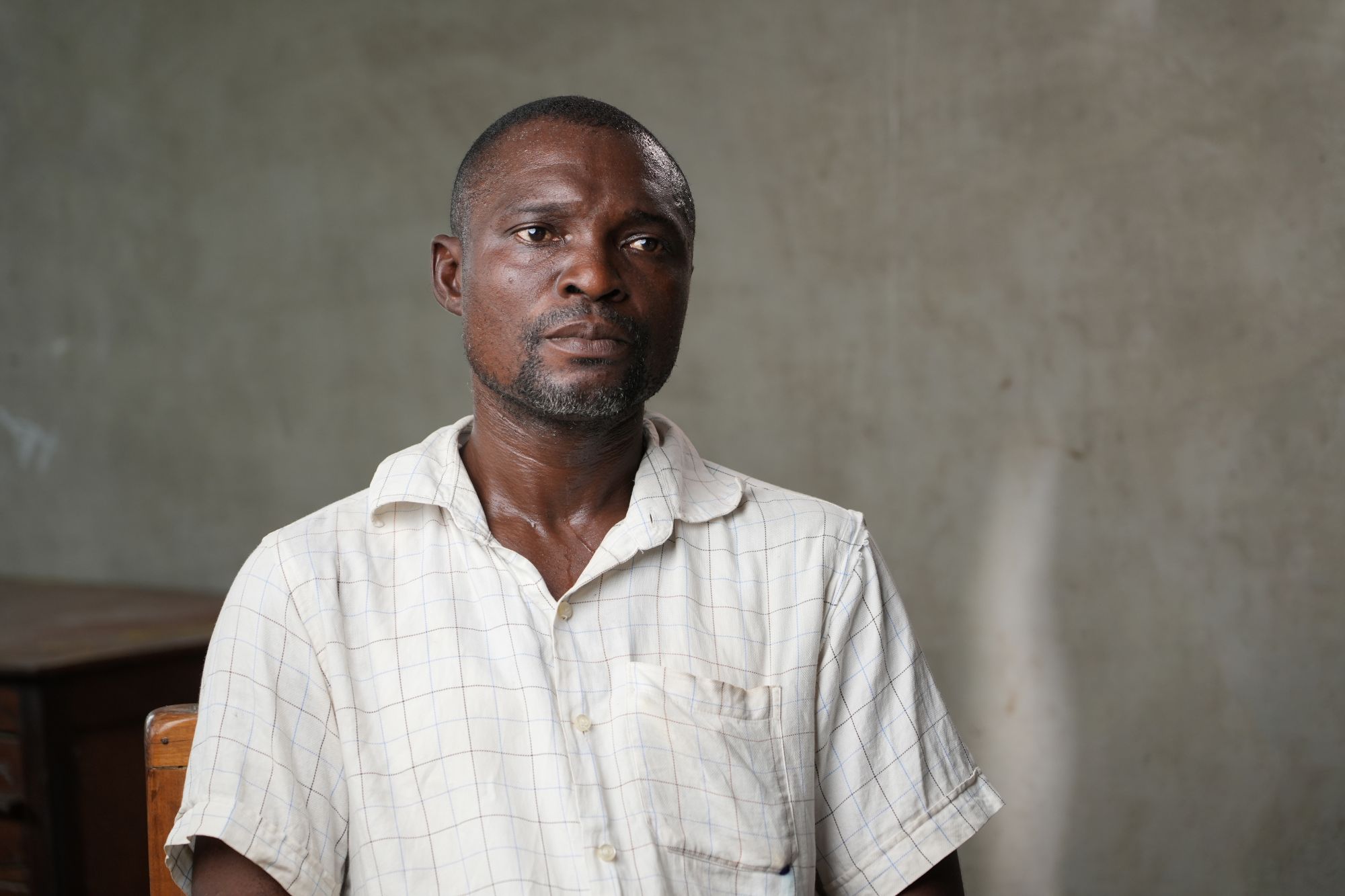
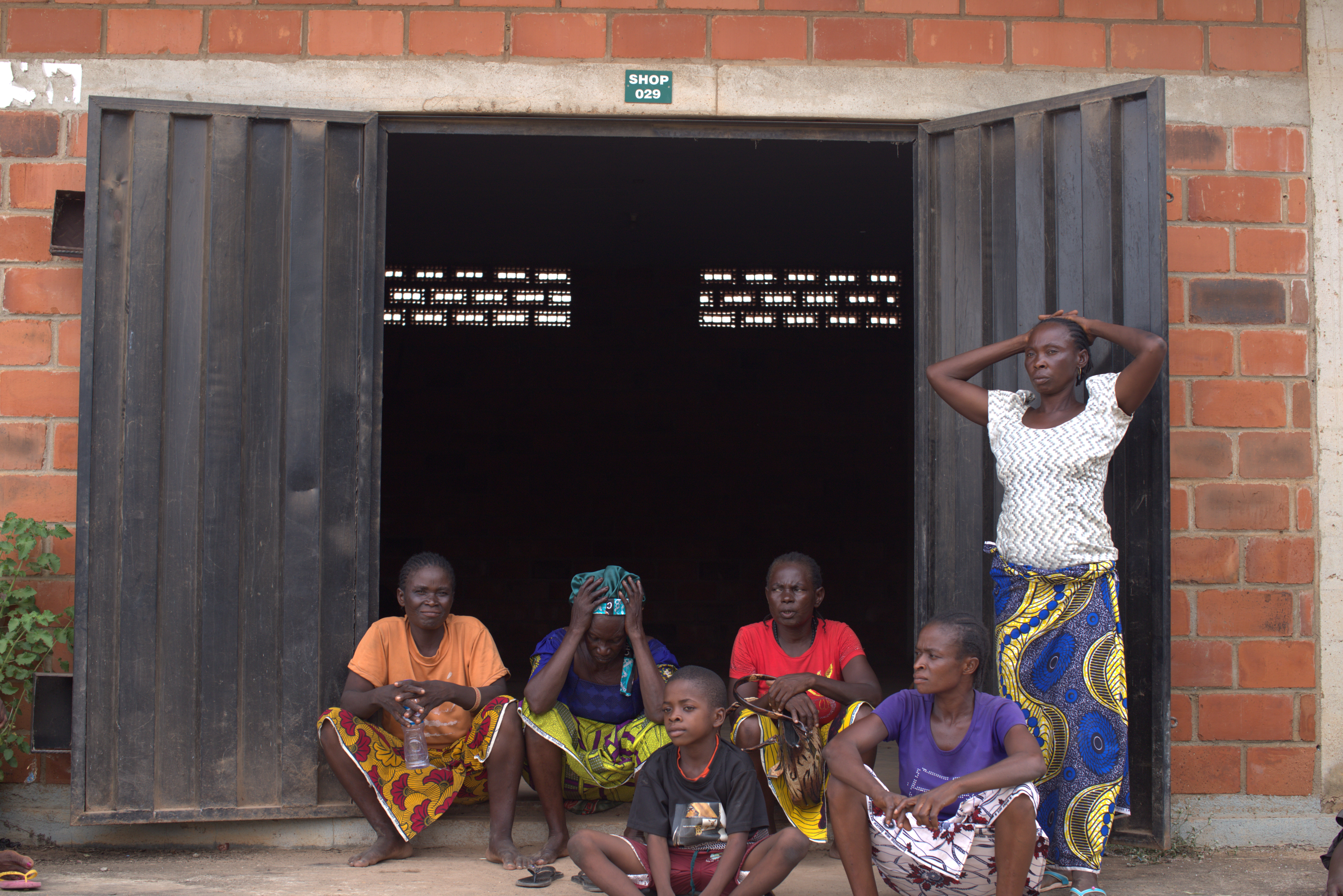
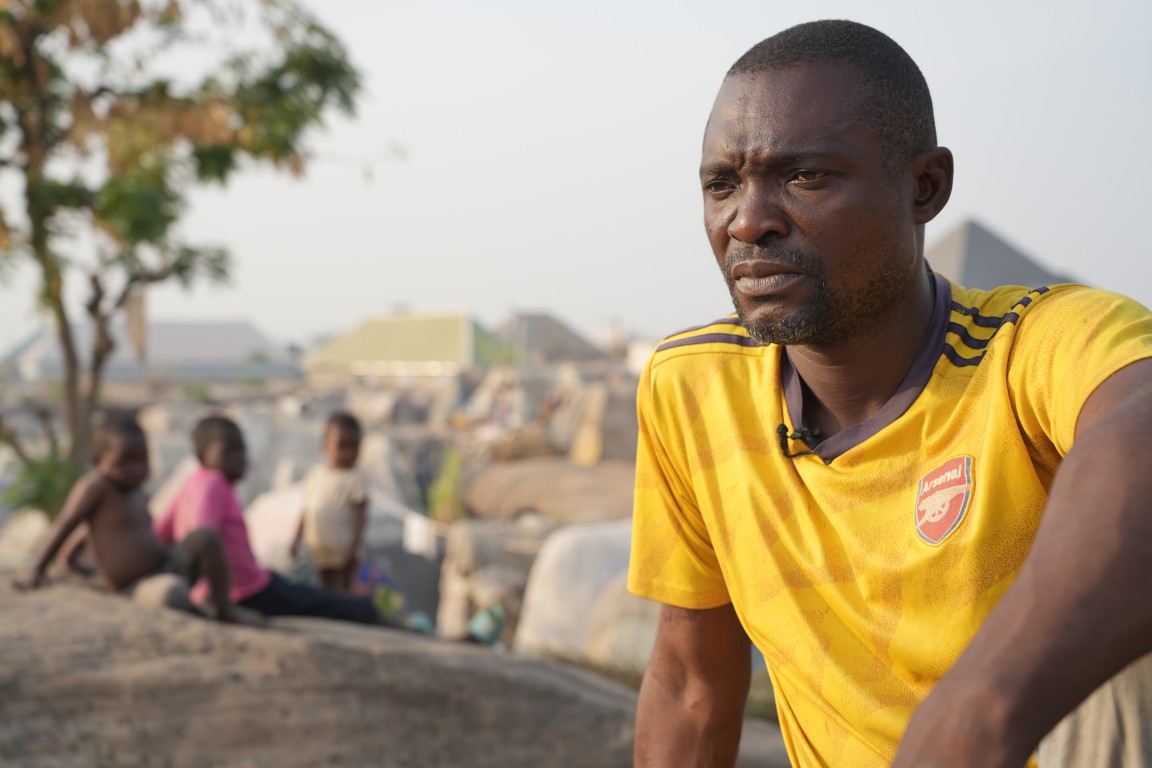
As Pastor Barnabas walks through the camp, he points out the makeshift tents in every direction. There are hundreds of them, small huts where people are huddled, seeking refuge from the sun. Thousands of people live here, in an informal camp for internally displaced people (IDPs), in Benue State in northern Nigeria. “Each and every one you see here—we are all Christians,” he says. “We are displaced because of violence.” He speaks with a determined, authoritative voice. You can see the compassion register on his face as he talks, but there is something else, too: a forcefulness that comes from a righteous anger that he and his church family have ended up in a camp like this. 

It’s one of many similar IDP camps across sub-Saharan Africa, where 16.2 million Christians have been forcibly displaced—many due to violence. Many of those millions are Christians like Pastor Barnabas, who face attack simply because they follow Jesus.

Even though so many people are affected every year, this displacement crisis often isn’t recognized by the wider world. It’s something Pastor Barnabas finds frustrating and heartbreaking: “Millions of Christians are displaced, here in Nigeria. Millions of Christians are displaced in the whole of Africa. The news doesn’t care about it, politicians don’t talk about it, government don’t talk about it, global politics don’t talk about it. Nobody talks about it. We are remaining in darkness. Tell me: How that would make you feel? Being forgotten, being disregarded?”

‘A terrible place to live’

Pastor Barnabas gets to his tent, and stoops down to show it. Even though he and his family have lived in the camp for almost five years, their home is made of whatever materials were available. “We don’t have accommodation, we don’t have houses to live in,” he says. “We can only go and pluck palm leaves and use mosquito nets to construct it. And that is how we stay: We don’t have any privacy, me and my children.”

or a family with five children, the tent is far too small. Pastor Barnabas gestures to the four sides: “From here to here, it’s 1.5 meters (about 5 feet). From here to here, it’s 1.5 meters. From here to here, it’s 1.5 meters. It’s smaller than a double mattress. I don’t have a bed.  

“Because my tent is too tiny, I can’t stay with my children,” he continues. “Three of them stay here with me and my wife. The rest of my children join with my neighbor. When day breaks, they come back to stay with me. His role is to pastor the believers in the camp. During the day, you’ll mostly meet women and children. Pastor Barnabas explains: “Most of the men—they have gone out looking for work to do, in order to get daily food. But yet, it will not be enough for a meal for a day.” Many of these Christians have left behind farms—places where they would be able to get food for their families. But they would be in extreme danger if they venture there.

Every day, Pastor Barnabas sees the men in the camp weigh this terrible choice. “This hunger leads many of them to go in search of food to eat where they are being attacked by the militants,” he says. “They have no option, they have to go back there again—and when they go, they are attacked again.”

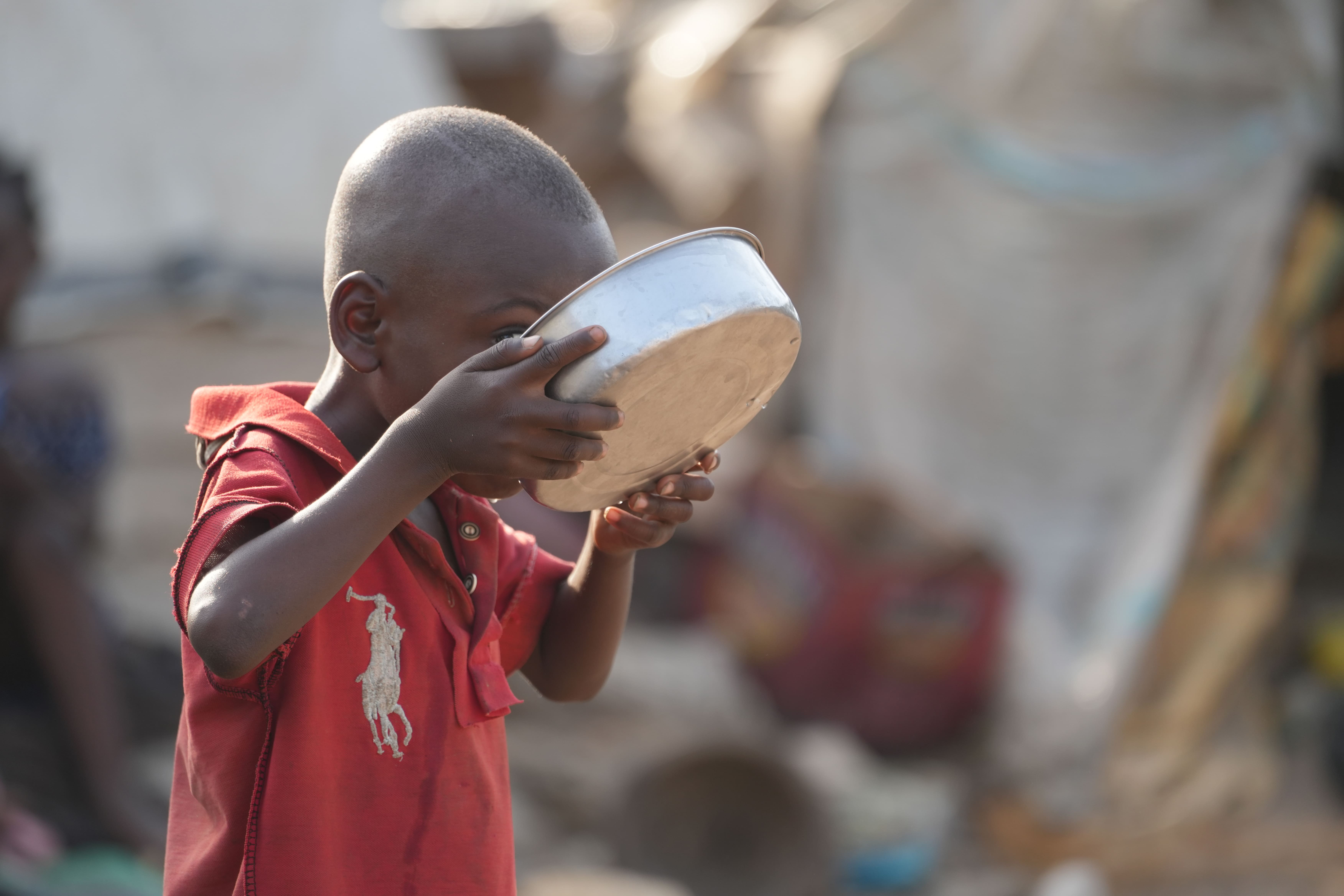
The IDP camp is a bit safer, but the living conditions are appalling. “It is not easy to live in IDP camp. It is a terrible place to live,” says Pastor Barnabas bluntly. “In the IDP camp, we don’t have good hygiene, we don’t have water, we don’t have toilets, we don’t have good sanitation. Many people are dying. Only last week, as I am talking, we lost eight people in this IDP camp.”

People wouldn’t live in a camp like this if they had any other choice. They only live here because it’s worse outside the camps—because of the horrendous persecution that has displaced them.

‘I was attacked by the Fulani militants’

Every year, thousands of Christians in Nigeria and across sub-Saharan Africa are murdered for their faith. Open Doors’ 2024 World Watch List research shows that about 95% of believers killed last year for their faith are in sub-Saharan Africa. More Christians were killed for their faith in Nigeria than the rest of the world combined. And that doesn’t include the huge numbers of people who are injured, abducted, face sexual violence, or lose their homes and livelihoods.

Pastor Barnabas overlooks the IDP camp

Pastor Barnabas can easily empathize with the displaced women, men and children who have faced this violence. He’s been through exactly the same experience.

“I was on the farm with my brother, Everen, and his wife, Friday,” he remembers. “We were walking when we heard rapid shooting of guns and other sounds. We didn’t know what was happening. We saw people running in different directions. We didn’t know that the militants had surrounded us.” 

“We didn’t know that the militants had surrounded us.”Pastor Barnabas

The community was being attacked by Fulani militants, a group of Islamic extremists who are responsible for many of the violent attacks in north central and central Nigeria.

“We began to ask each other, ‘What is happening?’ and said, ‘We should run, we should run’,” he says. “Some of them came with guns, some of them came with machetes, some of them came with sticks.”

Tragically, Everen and Friday weren’t able to escape their persecutors. It’s been almost five years, but the pain is still raw for Pastor Barnabas.  “My brother was shot by the militants, and my brother’s wife was also shot and then macheted and killed by the militants,” he says.

Lasting injuries

The attack kept going. Pastor Barnabas couldn’t stop to help his brother and sister-in-law, or even to retrieve their bodies. “I kept running,” he remembers. “Then the militants divided themselves and one of them followed me.”

This man tried to attack Pastor Barnabas with a machete, but accidentally dropped it. “He proceeded to remove his stick and hit me on my hand, and my hand was badly broken,” Pastor Barnabas says. 

“If not for God’s intervention, if not for God’s love, I wouldn’t be where I am today.”Pastor Barnabas

Years later, he is still affected by these injuries. The attack caused long-term damage and, while he managed to gather enough money to pay for initial surgery, he can’t afford to have the metal in his hand removed. Without a second operation, he can’t use his hand properly. It’s a daily reminder of the horror he experienced at the hands of the militants.

He knows it could have been even worse. The only reason the brutal attack stopped without Pastor Barnabas being killed was because he was running in the direction of police. “Thankfully, I was close to the main road and there was a checkpoint with police officers,” he says. “The officers heard us and started shooting into the air. The militant couldn’t harm me the way he wanted. He became scared and ran back, and that was how I was saved.”

Despite the horrendous ordeal, Pastor Barnabas is grateful to God that his life was saved. “If not for God’s intervention, if not for God’s love, I wouldn’t be where I am today,” he says. “I hand everything over to God; let the will of God be done in my life.”

Why was Pastor Barnabas attacked?

Attacks like this one happen countless times in northern and central Nigeria and in nearby countries. Sometimes Fulani militants are the perpetrators—in other attacks, Boko Haram, the Islamic State group (ISWAP) or other jihadist groups are responsible for the violence. Their motivation is clear: to destroy as many Christians and Christian communities as possible and establish a caliphate (an Islamic state).

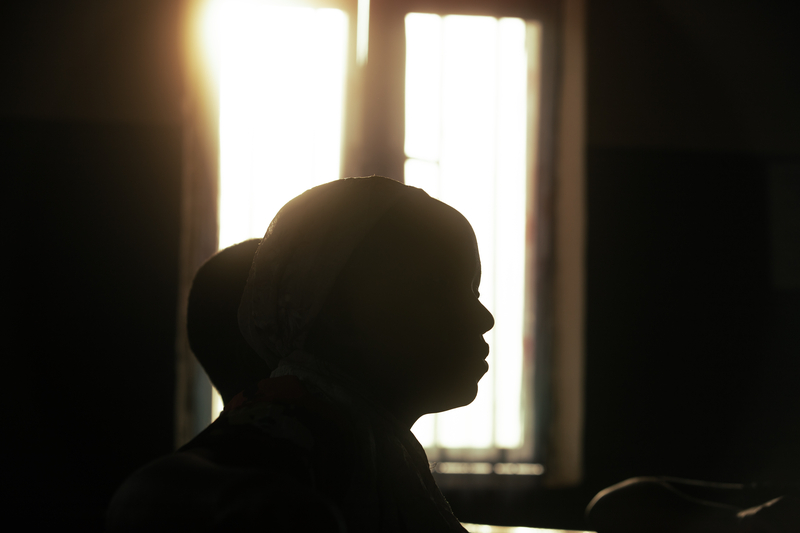
Pastor Barnabas and a displaced woman in an IDP camp in Nigeria

“We discovered that this thing [violent attack] is because we are Christians,” says Pastor Barnabas. “They want to convert us to being Muslim, as they are.” The attackers take land and other spoils; some victims of these attacks aren’t believers, but research and first-hand testimonies both demonstrate that Christians are being particularly targeted for their faith.

“The reason why we know that they are attacking us because we are Christians is because, when they come to attack us, they call us ‘capari,’” Pastor Barnabas explains. “It means you don’t have any religion.” The militants don’t value their lives, because they are considered infidels.

He lives with the impact of his individual attack every day, but Pastor Barnabas wants to make clear that it is a far, far wider problem. The huge numbers of Christians in IDP camps are there because they have fled this sort of violence, or the threat of it. “In this camp, many people are affected, many are injured, many are killed or their loved ones have been killed,” he says. “This affected not only my family, not only in the particular IDP camp I’m living, but there are millions of Nigerians that are being displaced. And it is not only in Nigeria these things are happening. They are happening in the whole of Africa.”

Permanent scars

When a Christian community is attacked by a militant group, the effects are long-lasting. As well as the terrible loss of life, it removes any means of getting an income, or future opportunities for the children of affected believers. “Now, I have lost everything that I had. Everything in my home and village was burned; I was left with nothing,” says Pastor Barnabas. “I cannot take care of my children. I cannot feed them. I cannot take care of my family. My children now, they are no longer in the school. This has affected them.”

He continues: “As a father, the Bible says we should bring up a child in the way of God – when he grows up, he will not forget this way. But now, as a father now, what example will I give to my children when they grow up? Will they say: My father did not help me and I didn’t have a house? They were living a godly life—but now, because of this, they are influenced by bad people.” 

“People ask: ‘If our God is alive, then why would He allow us to pass through this kind of a problem that we are in?'”Pastor Barnabas

Pastor Barnabas also sees how the trauma of this violence, and the ongoing desperation his church family experiences, challenges their faith. Many join in his services in the IDP camp, praising God in the face of this persecution—but many also question why this is happening to them.

“People ask: ‘If our God is alive, then why would He allow us to pass through this kind of a problem that we are in? Why are we not seeing God’s intervention?’” says Pastor Barnabas. “Their minds have been discouraged, and that makes them ask these kinds of questions. Many people are losing their hope in God because of the situation they are in.”

women praying in an IDP camp in Nigeria

He also sees how hard it is to remain faithful to God when you don’t know where your next meal will come from, or when you are watching your children suffer. He has even seen some of the Christian women in the IDP camp turn to prostitution, in order to get money to feed their families.

One of the tactics of persecutors is to disgrace Christians so much that they question their faith—in Nigeria, this often means robbing men of their traditional role as providers, and sexually assaulting women, leaving them regarded as shamed or damaged by the surrounding community. Whatever the tactic, the result is the same: the church’s light is diminished. Pastor Barnabas is desperate to help believers in his camp. “I don’t have anything to give them,” he says. “We can only pray together and share the word of God together. As a pastor, I am supposed to take care of these sheep. So, it makes me as a pastor …” he trails off.

“I feel very, very bad.”

Persecution remains a real danger for all Christians in this region. Even the IDP camps don’t have proper security, and believers are fearful and vulnerable to violence, including sexual violence. And Pastor Barnabas’s ordeal isn’t over. Even while he was speaking with Open Doors partners, he heard the terrible news that Ifa, another of his brothers, had been attacked by Fulani militants while trying to gather food. The militant struck him on the head with a machete, and he nearly died. It’s a stark reminder of the constant, ongoing dangers facing Pastor Barnabas and the other Christians in this camp and throughout Nigeria.

A confident hope

Despite all he has experienced, Pastor Barnabas knows he can be sure of God’s faithfulness. “God has been helping and He’s the one that has been sustaining me and has kept me till today,” he says. “That’s the reason why I still strongly hold on to Him.

“I will not lose my confidence in God. And I will always encourage them that, no matter what should be the situation, they should still believe God that, one day, we shall come back to our ancestral homes.”

Pastor Barnabas preaches at an IDP camp in Nigeria

He continues: “What I want to say is, whatever has happened to us, we should believe that God still exists. Everything has its own time. It does not matter how long we have been in this camp—a day will come when God shall take us back to our ancestral homes. It’s over four years that we have been in this place. I did not come here with anything, but God is using individuals and groups to take care of me.”

Your gifts and prayers at work

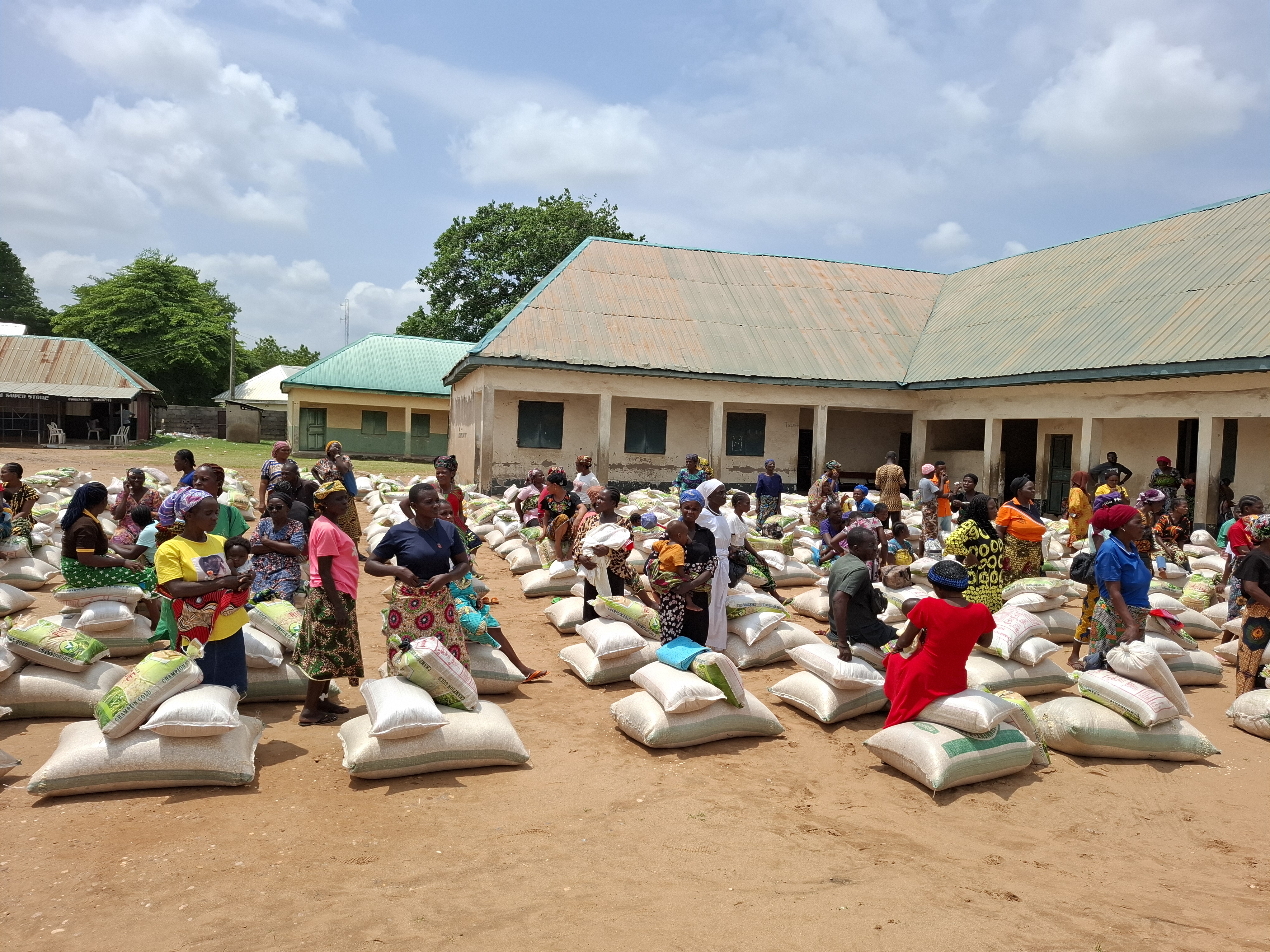
Thanks to your support, Open Doors local partners have been able to provide emergency food packages to IDPs in Pastor Barnabas’ camp. “If you are hungry, you will lose your confidence in God; if you are sick, if you are not strong, you may lose your confidence in God.” This vital supply of food isn’t just meeting people’s physical needs – it can help them persevere spiritually too, giving confidence that God hasn’t abandoned them when He uses local Open Doors partners as His hands and feet. Local partners are also planning to provide skills training and trauma care, to support long-term resilience and self-sufficiency. Open Doors local partners were also able to help with Ifa’s urgent medical bills, and are paying for Pastor Barnabas’s operation on his hand.

Pastor Barnabas is keen to send thanks to the Open Doors supporters—people like you—who make this possible through their prayers and gifts. “Brothers and sisters, you have been very supportive in the area of food particularly in this IDP camp,” he says. “We have been starving, but any time it becomes critical, you assist us; we are very grateful. Recently you provided us with corn, rice, beans and other things.

“I want to use this opportunity to say thank you for your ministry. It has been a help for us. If not for the help of your ministry, I don’t think it would be easy for us to live. But with the aid of this ministry, they cared for us. They took us along as brothers and sisters. They cared for us as mothers, as fathers and as sisters. 

“So, I am very, very grateful. My prayer for [you] is that God Almighty will remember [you] the way they remembered us. May God Almighty strengthen [you] the way they strengthened us.

“We are grateful as a family. I am grateful. As an individual, I am grateful. On behalf of the IDP camps and especially in the ministry where I am, we are grateful, we are saying thank you. Thank you, thank you, God bless you.”

‘[God] is the only One that can help us’

There is still so much danger and persecution in the region, and the believers Pastor Barnabas cares for long for a time of safety, security and plenty. They want to go home. They want the violence to end. And they want to heal.

When asked what he is praying over the situation, Pastor Barnabas says, “My prayer is that God Almighty should intervene into this case. He should fight this battle for us, because the battle is not ours, it is His. So, our eyes and our hope are on Him. He is the only One that can help us. Without Him, no man can help us.”

Pastor Barnabas worships with other Nigerian Christians in an IDP camp

He adds: “The Bible says ‘I will fight the battle for you and give you rest.’ If God Almighty will fight the battle for us, I believe a day shall come that we will be at peace. We will live a good life. Even those things that we lost, God will restore back. He did it to people before; He did it to Job.

“I believe that we will not be an exception. So, I say to my people, the Christians in the IDP camp, I believe that God lives high and lives forever in the name of Jesus. I am praying that God should help all of us to still have confidence and hope that it is going to be well with us. That is my prayer.”

Pastor Barnabas knows how vital the support and prayers of his worldwide church family are. “If there is any where you can contribute yourself, contribute in a way to help us Christians in the IDP camp, please do it and God will bless you,” he says, “and join together with us to pray that God Himself should be our defender and that God should preserve our lives—that God would sustain us and keep us.”

Open Doors works with partners in Nigeria and across sub-Saharan Africa to provide food, relief aid, spiritual sustenance, trauma care, Bibles, training and more. Click here to find out how you can support this vital work among your brothers and sisters in Africa. 

7Nigeria

  • LeaderPresident Bola Ahmed Adekunle Tinubu
  • No. of Christians102,988,000 (46%)
  • Main ReligionIslam
  • Persecution SourceIslamic oppression
  • GovernmentFederal Presidential Republic
Persecution Level

010088

  • Private Life
  • Family Life
  • Community Life
  • National Life
  • Church Life
  • Violence

6

Eri8Pak

Related Articles

10 things you need to know about violence in Nigeria

Nigeria | 16 October 2025

From Kidnapping to Healing: One Christian Woman’s Journey Through Fulani Militant Violence in Nigeria

Nigeria | 24 September 2025

‘Glimmers of hope’

Nigeria | 11 September 2025

Another attack in Nigeria: Please help!

Nigeria | 18 August 2025

Update: 300 families helped in Nigeria!

Nigeria | 31 July 2025

Shocking testimony from Nigeria: Please pray

Nigeria | 13 July 2025

An Update on Pastor Barnabas

Nigeria | 03 July 2025

New attacks in Nigeria leave 200+ dead

Nigeria | 22 June 2025

View the page for Nigeria

https://www.opendoorsus.org/en-US/stories/pastor-barnabas-displacement-arise-africa

70 Christians Beheaded in Church in the DRC

The other day I made a video about the Christian persecution including murders that have been happening in Nigeria. Now we have 70 decapitated bodies that were found in a Church in the Democratic Republic of the Congo (DRC). An Islamist group linked to Islamic State called the AFD are feared to have beheaded the victims with machetes. Here is more from Newsweek.

The 70 decapitated bodies were discovered in a Protestant church in the town of Kasanga, in the Lubero Territory in the province of North Kivu toward the end of last week, according to Open Doors.

No group has taken responsibility for the atrocity, but Open Doors, and several other organizations, have accused the AFD of the murders, citing “field sources.” The victims are believed to have been taken hostage a few days before they were killed.

Military administrator Alain Kiwewa for the Lubero Territory said he was investigating the incident, Pan-African news agency Agence de Presse Africaine reported.

“Local sources suspect the Allied Democratic Forces (ADF), an Islamist group of Ugandan origin affiliated with the Islamic State, as well as local armed groups of being responsible for the massacre. These groups have maintained a climate of terror in the region for several months,” the agency said.

It said the victims, who had been “tied up and decapitated with knives,” had been kidnapped on February 12.

American conservative anti-abortion activity Lila Rose posted on X: “Horrific. 70 Christians were brutally beheaded by an Islamist group inside a church in the Democratic Republic of Congo Where’s the media outrage? Pray for persecuted Christians.”

According to Christianity Today, 365 million Christians live in nations with high levels of persecution or discrimination. That’s 1 in 7 Christians worldwide, including 1 in 5 believers in Africa, 2 in 5 in Asia, and 1 in 16 in Latin America. According to their top 50 countries for Christian persecution, North Korea ranked No. 1, as it has every year except for 2022 when Afghanistan briefly displaced it. The rest of the top 10 reshuffled but remained the same: Somalia (No. 2), Libya (No. 3), Eritrea (No. 4), Yemen (No. 5), Nigeria (No. 6), Pakistan (No. 7), Sudan (No. 8), Iran (No. 9), and Afghanistan (No. 10).

Remember to pray for our brothers and sisters in Christ who are suffering persecutions. In Nigeria there’s a believer killed every 2 hours at least! Prayer is our most powerful tool when used earnestly and consistently! I love Psalm 91 myself, beginning with verse 1 and 2. Whoever dwells in the shelter of the Most High will rest in the shadow of the Almighty. I will say of the Lord, “He is my refuge and my fortress, my God, in whom I trust.” Here are 4 more you can use to pray for our persecuted brethren.

Stay tuned as I’ll be back tomorrow (God willing) to talk about the persecution of true believers in America with the Noahide laws. Blessings to you all

Johnny

You can support this ministry and keep us on the internet using the links below.  Patreon is gone so now we havePayPal, Cash App and Buy me a Coffee as our online options.  The new buy me a coffee link is below.

Free Ebook on Spiritual Warfare

Buy me a Coffee

Cash App ID: $jstorm212

PayPal Link

The Ignored Genocide of Christians in Nigeria

A Scene All Too Familiar

John 16:2 says this “They will make you outcasts from the synagogue, but an hour is coming for everyone who kills you to think that he is offering service to God.”

As this article I’m sharing with you will show, Christians ARE ALREADY being persecuted around the world, Nigeria is just the new hot spot that no one is “speaking” about. That’s THE big reason why this website and the channel exist, to bring these types of stories to light. The article originated at the Gates Stone Institute. The tribulation hour is here, time is short!

“Earlier this year… [Boko Haram] released a video of a masked Muslim child holding a pistol behind a bound and kneeling Christian hostage, a 22-year-old biology student who was earlier abducted while traveling to his university. After chanting in Arabic and launching into an anti-Christian diatribe, the Muslim child shot the Christian several times in the back of the head.

Aside from some of the most grisly incidents… the so-called mainstream media does not report on the bulk of the persecution. Could journalists be worried that a politically incorrect pattern might emerge, in which attacks might appear ideologically driven, as opposed to just “crimes”?

The reason formerly simple Fulani herdsmen have, since 2015, managed to kill nearly twice as many Christians as the “professional” terrorists of Boko Haram…. is, to quote Nigerian bishop Matthew Ishaya Audu, “because President Buhari is also of the Fulani ethnic group.”

“Since the government and its apologists are claiming the killings have no religious undertones, why are the terrorists and herdsmen targeting the predominantly Christian communities and Christian leaders?” — The Christian Association of Nigeria, International Centre for Investigative Reporting, January 21, 2020.

“What Obama, John Kerry and Hilary Clinton did to Nigeria by funding and supporting [current president Muhammadu] Buhari in the 2015 presidential election and helping Boko Haram in 2014/2015 was sheer wickedness and the blood of all those killed by the Buhari administration, his Fulani herdsmen and Boko Haram over the last 5 years are on their hands.” — Femi Fani-Kayode, Nigeria’s former Minister of Culture and Tourism, Facebook, February 12, 2020.”

Read the rest of the story HERE. https://www.gatestoneinstitute.org/16349/genocide-christians-nigeria